
Cycle shelters and secure cycle stores for schools and workplaces
Covered and secure cycle parking for schools, workplaces and public sites, from open canopy shelters to fully lockable, weldmesh cycle stores, manufactured in the UK and installed by our own teams.
- Powder-coated steel
- Clear or solid roofs
- Lockable secure stores
- Custom end panels
What is a cycle shelter?
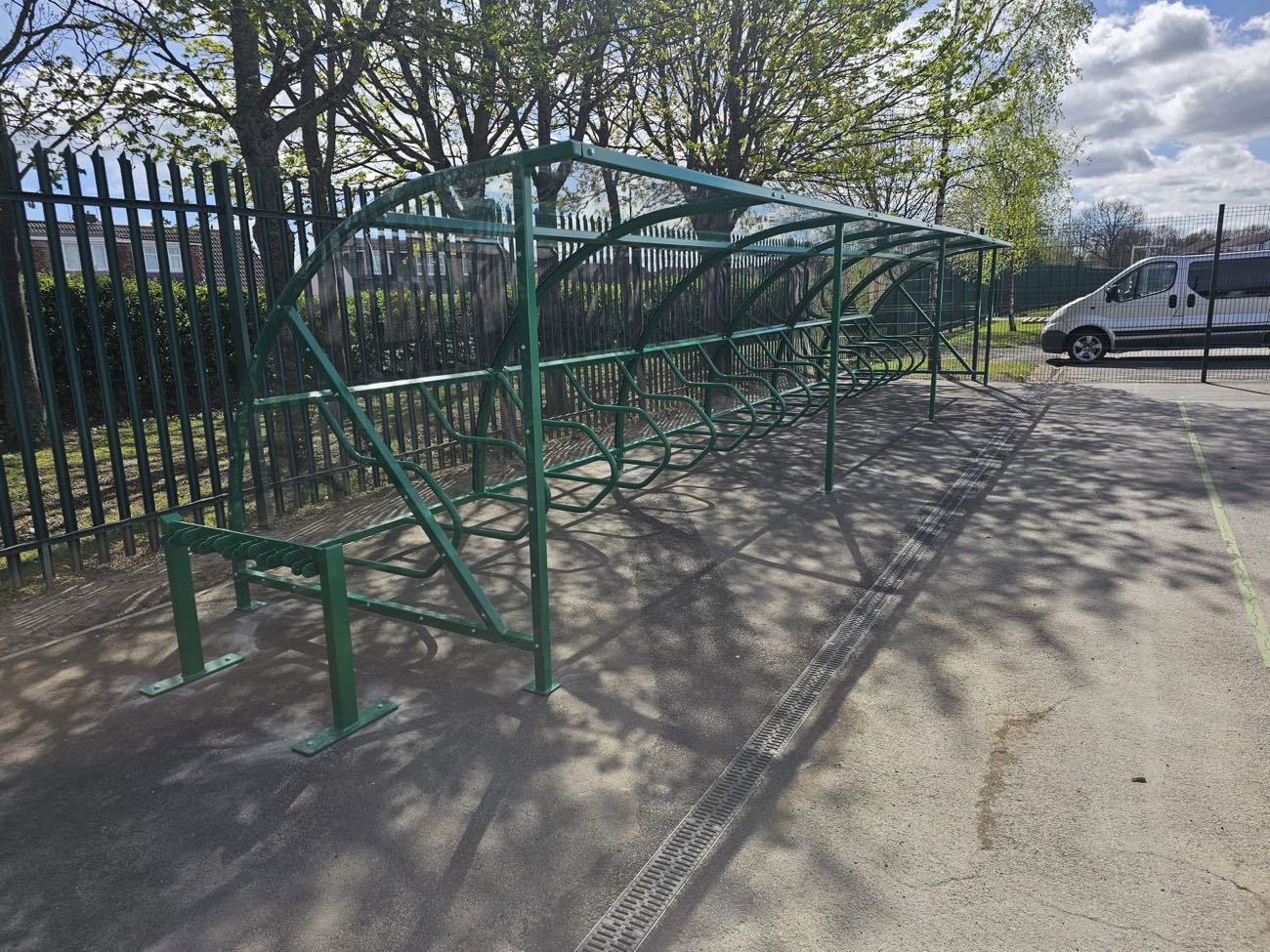
A cycle shelter is a permanent, engineered structure that gives covered or secure parking for bicycles, fixed to a base and built to stand outdoors year-round. It shelters cycles from rain and sun and, in a secure form, locks them away from theft.
Every cycle shelter we make combines a powder-coated steel frame with a clear or solid polycarbonate roof, sized to the number of cycles the site needs and fitted with toast-rack or Sheffield-style cycle stands. Schools, workplaces and public sites use them to give staff, pupils and visitors somewhere dry and secure to leave a bike or scooter, and we design, manufacture and install each one in the UK.
What types of cycle shelter do we install?
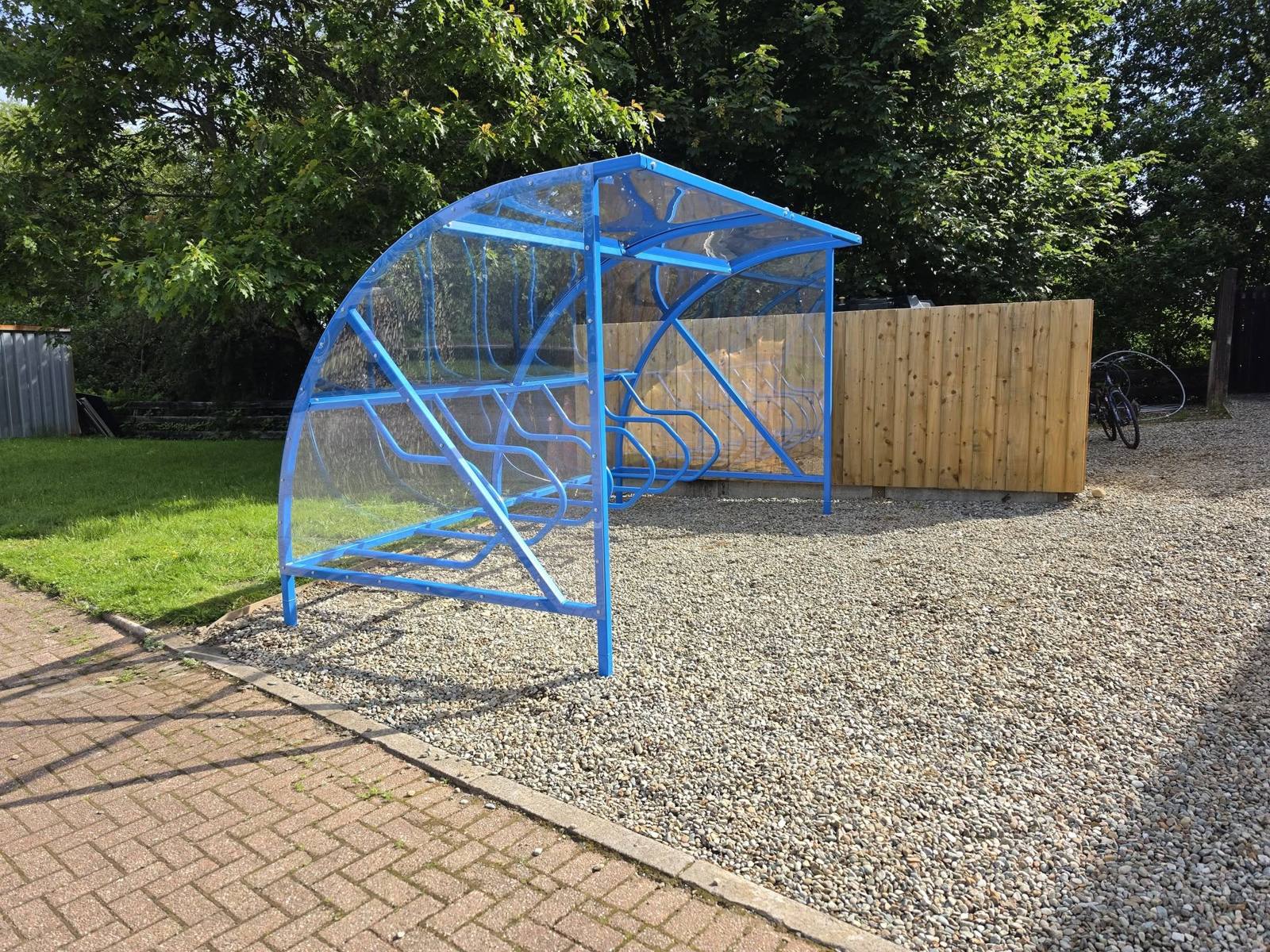
Canopies & Shelters supplies and installs the following cycle shelter types: open and canopy cycle shelters, enclosed cycle shelters, and secure lockable cycle stores and compounds. Each is engineered to the number of cycles, the site layout and the level of security the location needs, from a small canopy over a rack of stands to a fully gated compound.
Open and canopy shelters use a powder-coated steel frame with a clear or solid roof over toast-rack or Sheffield stands, giving quick, visible parking with easy access. Enclosed shelters add sides for more weather protection on an exposed site, and secure cycle stores and compounds add lockable weldmesh sides and gates so cycles and scooters are locked away, not just covered.
Open & canopy cycle shelters
Simple covered parking with a clear or solid roof, easy access, good visibility, quick to install.
Enclosed cycle shelters
Sided shelters for extra weather protection and security in exposed or higher-risk locations.
Secure cycle stores & compounds
Lockable, weldmesh-sided stores and gated compounds where bikes need to be locked away.
Storing scooters, prams or buggies at a school or nursery? Scooter and buggy shelters.
Which cycle shelter is best?
The best cycle shelter is the one matched to capacity and security risk, so a buyer compares three things: how many cycles the site needs to hold, how exposed the location is to weather, and whether the cycles need to be locked away or simply kept dry. An open shelter suits a low-risk site with good sightlines; a secure store suits a site with a real theft risk or where cycles are left overnight.
For a school or workplace with supervised, daytime use, we usually specify an open or canopy shelter with a clear roof over toast-rack or Sheffield stands, keeping cycles visible and access quick. For a public site, a station, or anywhere cycles are left unattended for longer periods, a lockable weldmesh secure store or compound gives the added protection those sites need.
What is a cycle shelter made of?
A cycle shelter is made of a powder-coated steel frame in any RAL colour with a clear or solid polycarbonate roof over toast-rack or Sheffield-style cycle stands, and, in its secure form, lockable weldmesh sides and gates.
Powder-coated steel frame
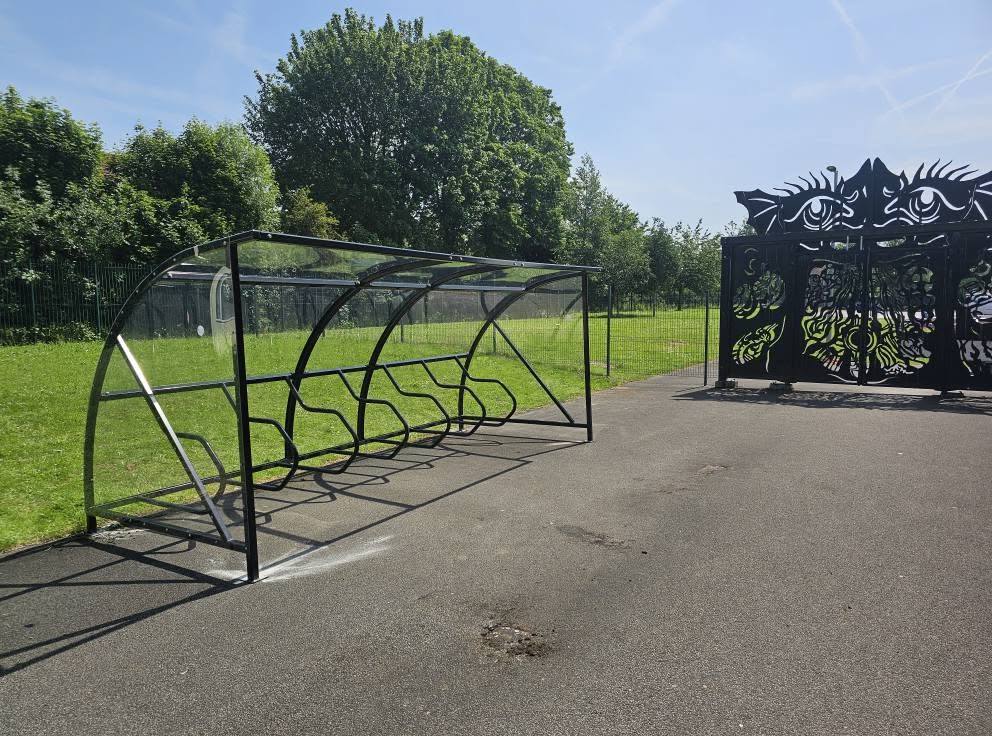
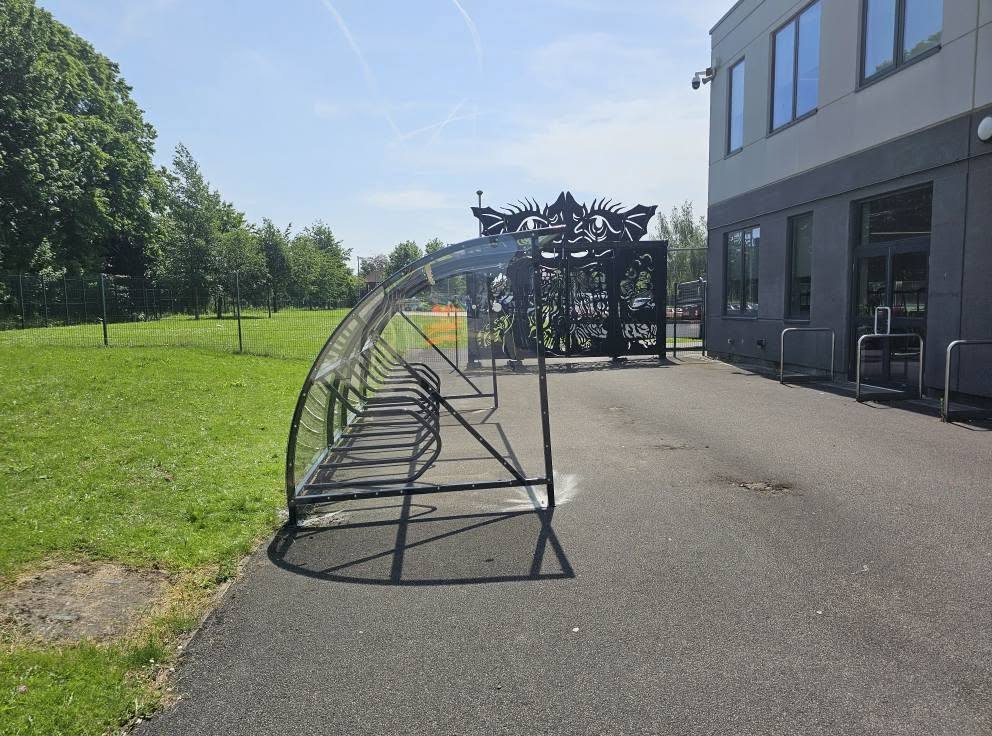
Finished to any RAL colour, with the option of custom laser-cut end panels, for example a school badge or graphic, as at Ellesmere Park High School.
Clear or solid roof
Clear or solid polycarbonate roof sheets over the stands, keeping cycles dry and, with a clear roof, the shelter light and visible.
Stands and scooter racks
Toast-rack or Sheffield-style cycle stands, with scooter racks alongside where a site needs both.
Weldmesh sides and gates
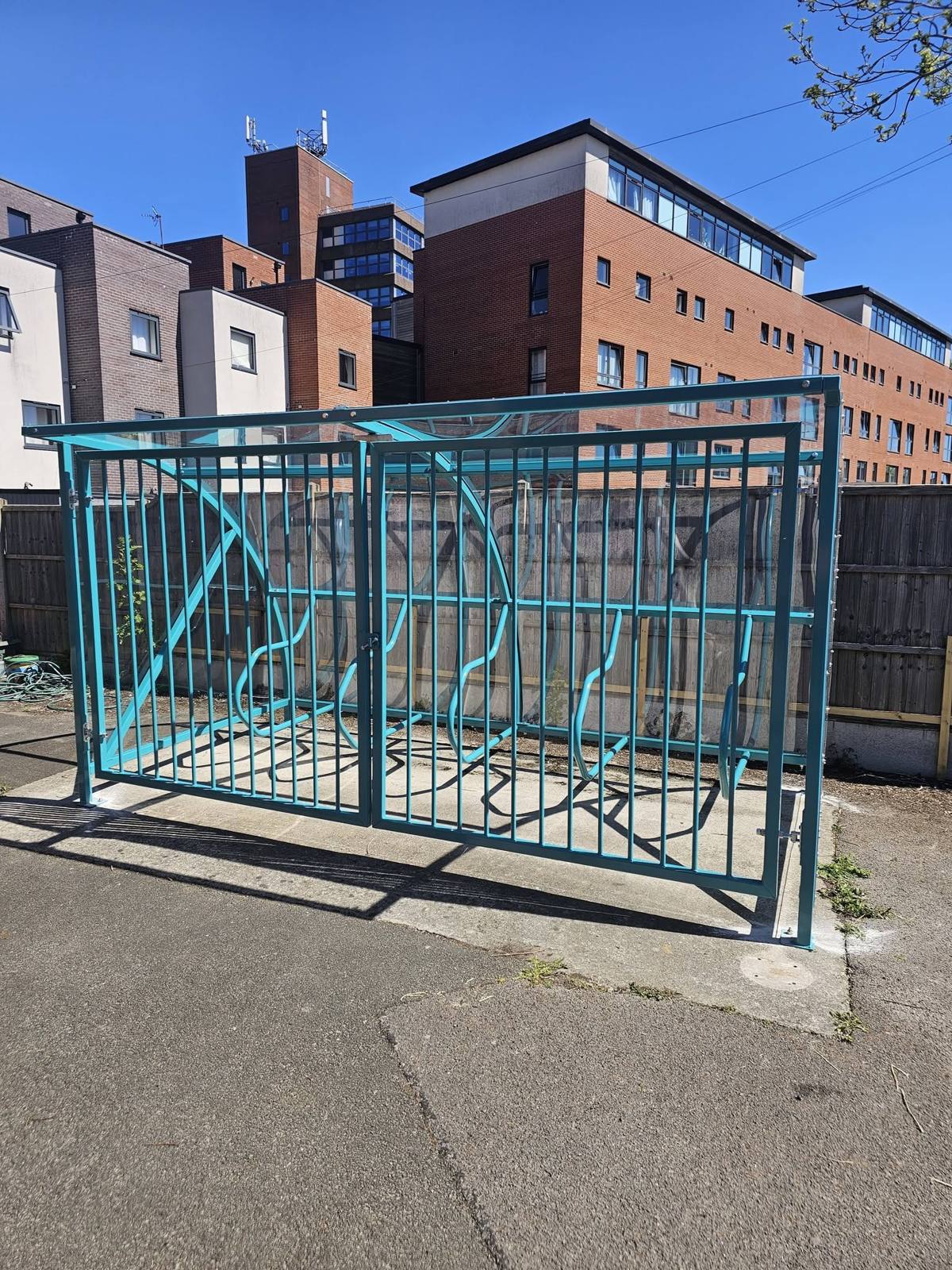
Lockable weldmesh sides and gates turn a shelter into a secure store or compound for cycles left overnight.
Which school bike shelters do we install?
Most of the school bike shelters we install are from the Chelsea range of powder-coated steel cycle shelters, fitted at primary and secondary schools and often paired with scooter racks. The same range covers workplaces, youth projects and community sites.
Sizing starts from how many cycles and scooters the school needs to hold. A Chelsea 12.0m at Warden Park School takes around 30 cycles, while Fens Primary School in Hartlepool has a Chelsea 12.0m and an 8.0m shelter with four scooter racks. We survey the site, set each shelter on a sub-fixed or concrete base and plan the install around the school day.
| Chelsea model | Where we have fitted it | From the job |
|---|---|---|
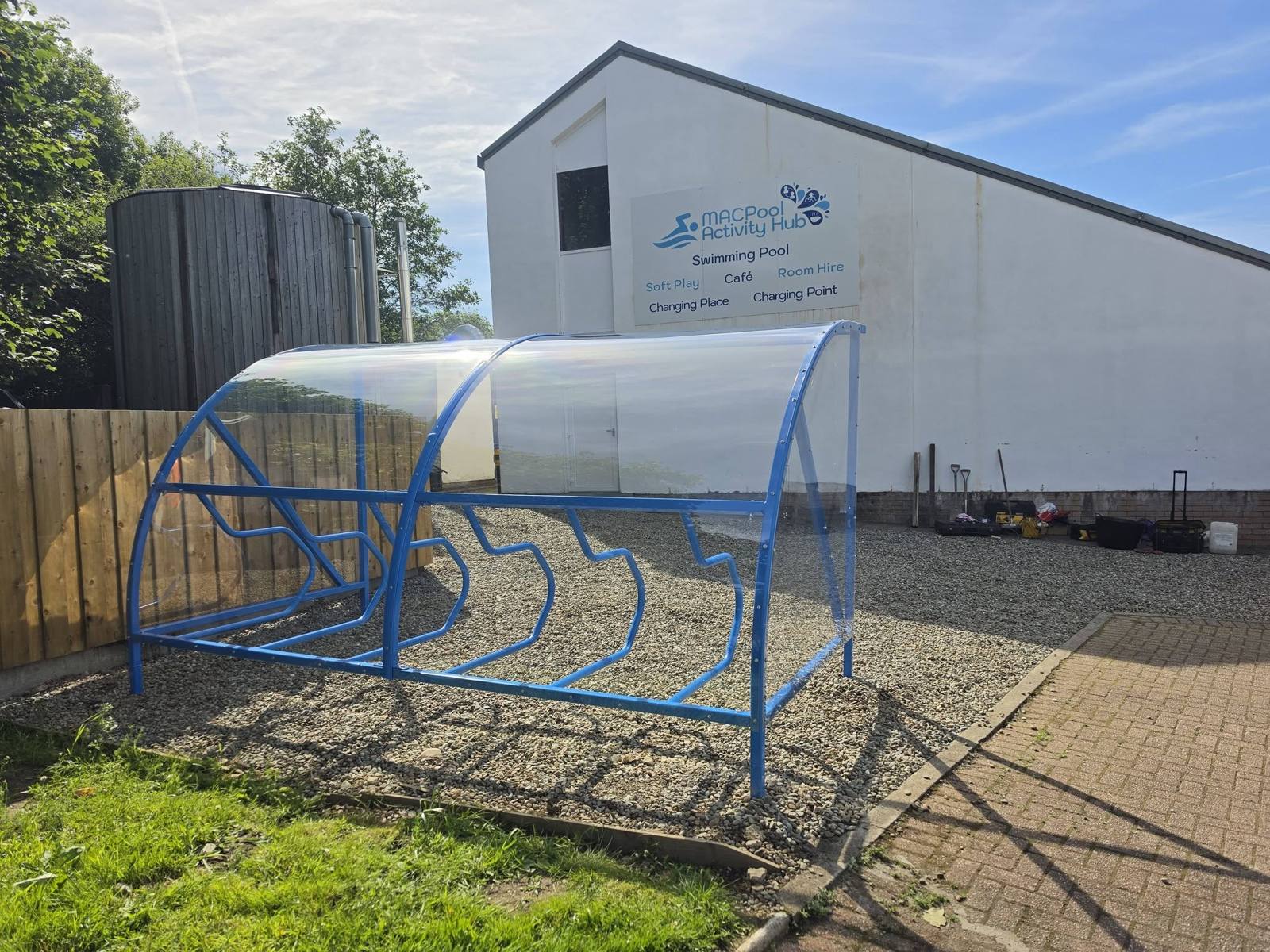
| Chelsea 4.0m | MACPool Activity Hub, Lochgilphead | Clear curved roof and cycle rack, powder-coated blue |
| Chelsea 5.0m | Ellesmere Park High School, Manchester | Clear curved roof and cycle rack, with the option of a custom laser-cut end panel |
| Chelsea 10 | St Boniface RC Primary School; Hideaway Youth Project, Manchester | Sub-fixed base at St Boniface; security gates at Hideaway |
| Chelsea 12.0m | Warden Park School; Fens Primary School, Hartlepool | Around 30 cycles at Warden Park; alongside an 8.0m shelter and four scooter racks at Fens |
| Chelsea 20 | Micklem Primary School, Hemel Hempstead; The Scent Reserve, Scunthorpe | Clear curved roof; the Chelsea 20 (8.0m) at The Scent Reserve is powder-coated black |
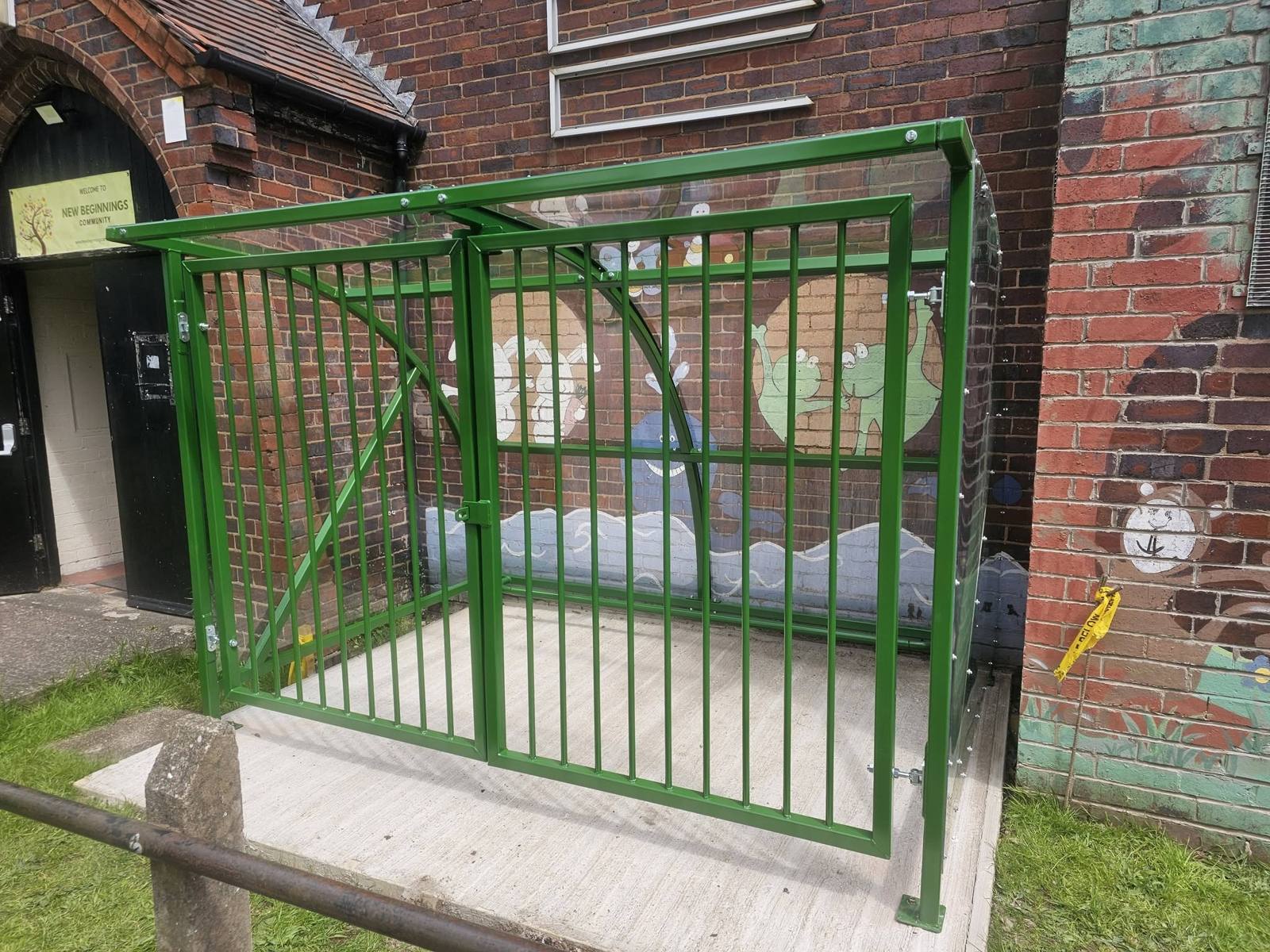
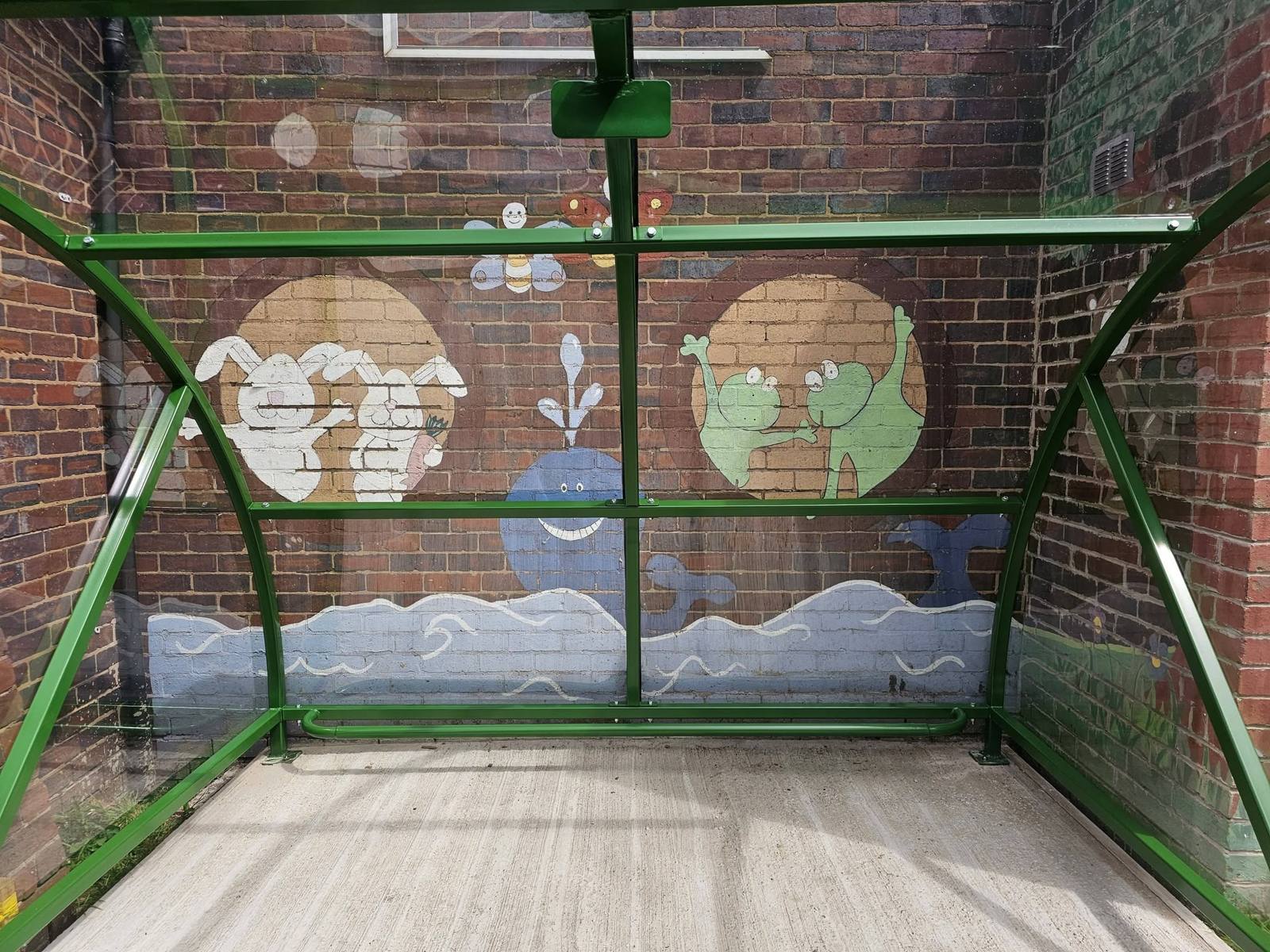
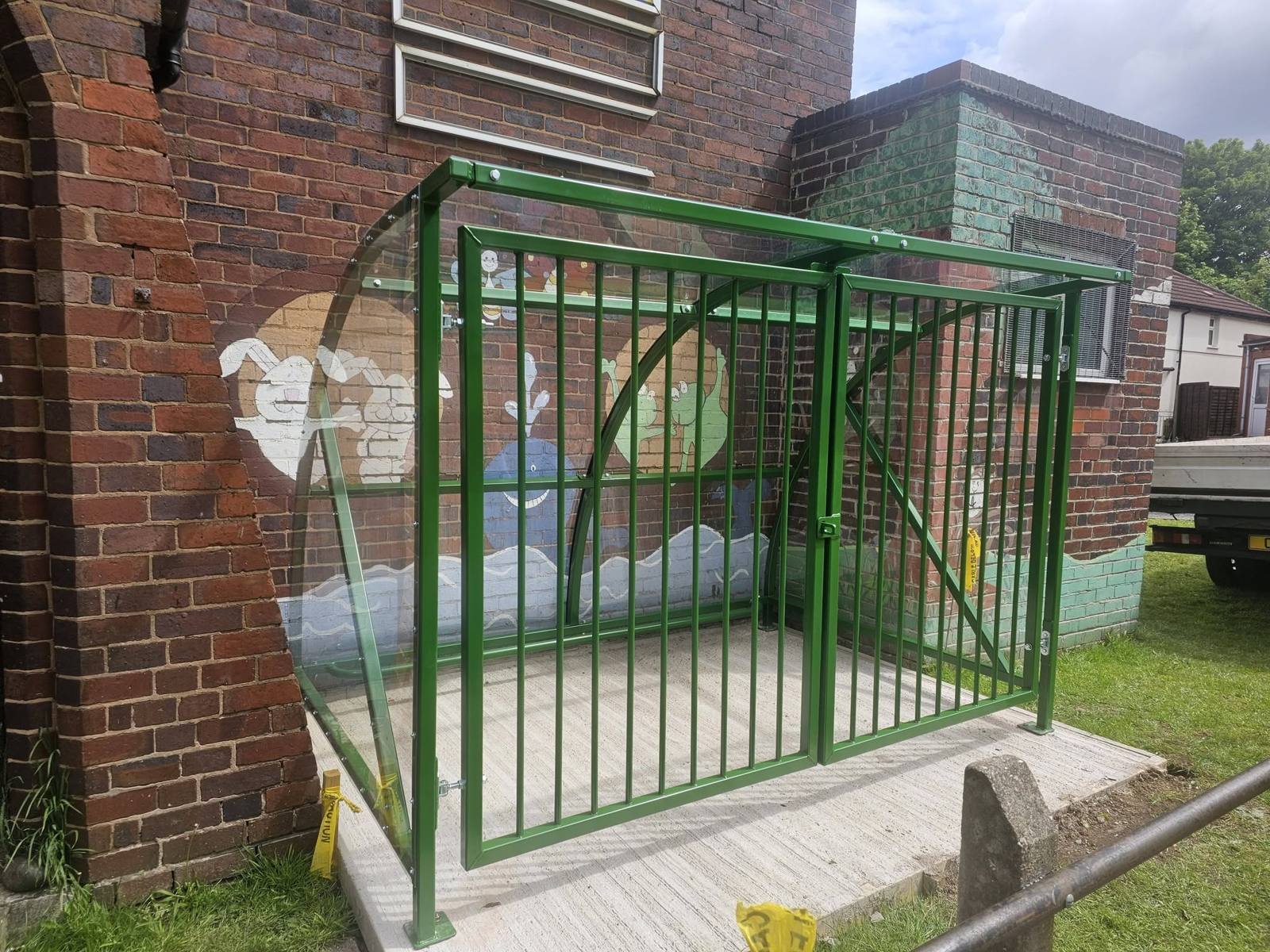
| Chelsea buggy shelter | Yew Tree Primary School and New Beginnings Creative, Birmingham | Clear roof on a concrete base; weldmesh security gates at New Beginnings |
Models and details as recorded on each completed job. We confirm the model, length and base for your site at survey.
How much does a cycle shelter cost?
A cycle shelter costs roughly £1,500 to £8,000 or more installed, depending on size, security level and roof material. These are indicative ranges to confirm at a site survey, not fixed prices, because the cost moves with the number of cycles, the frame size, whether the shelter is open, enclosed or a lockable secure store, the roof material and the base or groundworks the site needs.
Four things drive the figure: the capacity (the number of cycle stands and the frame length), the level of enclosure and security (open shelter against enclosed sides against a lockable weldmesh store with gates), the roof material (clear or solid polycarbonate) and the base or foundation required. We quote every cycle shelter after a survey and can provide CAD drawings and a specification for a school, council or workplace tender.
| Cycle shelter type | Indicative installed cost | Main cost drivers |
|---|---|---|
| Open or canopy cycle shelter | £1,500 to £3,500 | capacity, roof material, base |
| Enclosed cycle shelter | £2,500 to £5,000 | capacity, side panels, groundworks |
| Secure cycle store or compound | £4,000 to £8,000+ | weldmesh sides, lockable gates, capacity |
Indicative UK ranges to confirm at survey, installed and excluding any enabling works. Our work is quote-based; we do not sell fixed-price units.
Do cycle shelters need planning permission?
A cycle shelter on a school, workplace or public site often falls within permitted development, but this depends on the size, the site and whether the building is listed or in a conservation area, so it is worth checking before work starts; a small shelter is not automatically exempt.
Larger structures, sites in a conservation area, and cycle stores tied to a wider planning condition for a new development usually need a planning application or a building-control check on structural loading. We supply the CAD drawings, structural calculations and specification your planning consultant or building-control officer needs, and we can advise early on what a given site is likely to require.
How are cycle shelters installed?
Canopies & Shelters installs cycle shelters with our own teams across England, Scotland and Wales in four stages: a site survey, a CAD design and specification for sign-off, UK manufacture of the frame and stands, then the base and the on-site build. Most projects run a few weeks from survey to a finished, signed-off structure.
Shelters are fitted to a prepared base, either sub-fixed into a new concrete base poured for the job or fixed to an existing hard-standing where the ground is already suitable. We programme the install around a working school or premises to keep disruption low.
How long does a cycle shelter last?
A cycle shelter lasts 20 to 25 years. The powder-coated frame and any weldmesh sides are the long-life elements, and the roof sheets are the part most likely to be refreshed: at Stewart Fleming Primary School we re-clad an existing shelter with new roof sheets.
Powder-coated steel needs little maintenance beyond periodic cleaning and a check of the fixings and stands, and polycarbonate holds its clarity for many years. Individual roof sheets can be replaced without rebuilding the frame, and locks or gates on a secure store can be serviced or upgraded separately from the structure itself.
What are the benefits of a cycle shelter?
A cycle shelter gives staff, pupils and visitors somewhere dry and, in its secure form, somewhere locked to leave a bike or scooter, which supports cycle-to-work schemes and wider active travel goals by making cycling a practical choice.
For a new development, a cycle store often meets a planning condition for cycle-storage provision, so getting the capacity and security level right at design stage avoids problems later. Because the structure is engineered and fixed to a base, it adds a permanent, low-maintenance asset that copes with daily use across a school, workplace or public site.
Recent cycle shelter installations
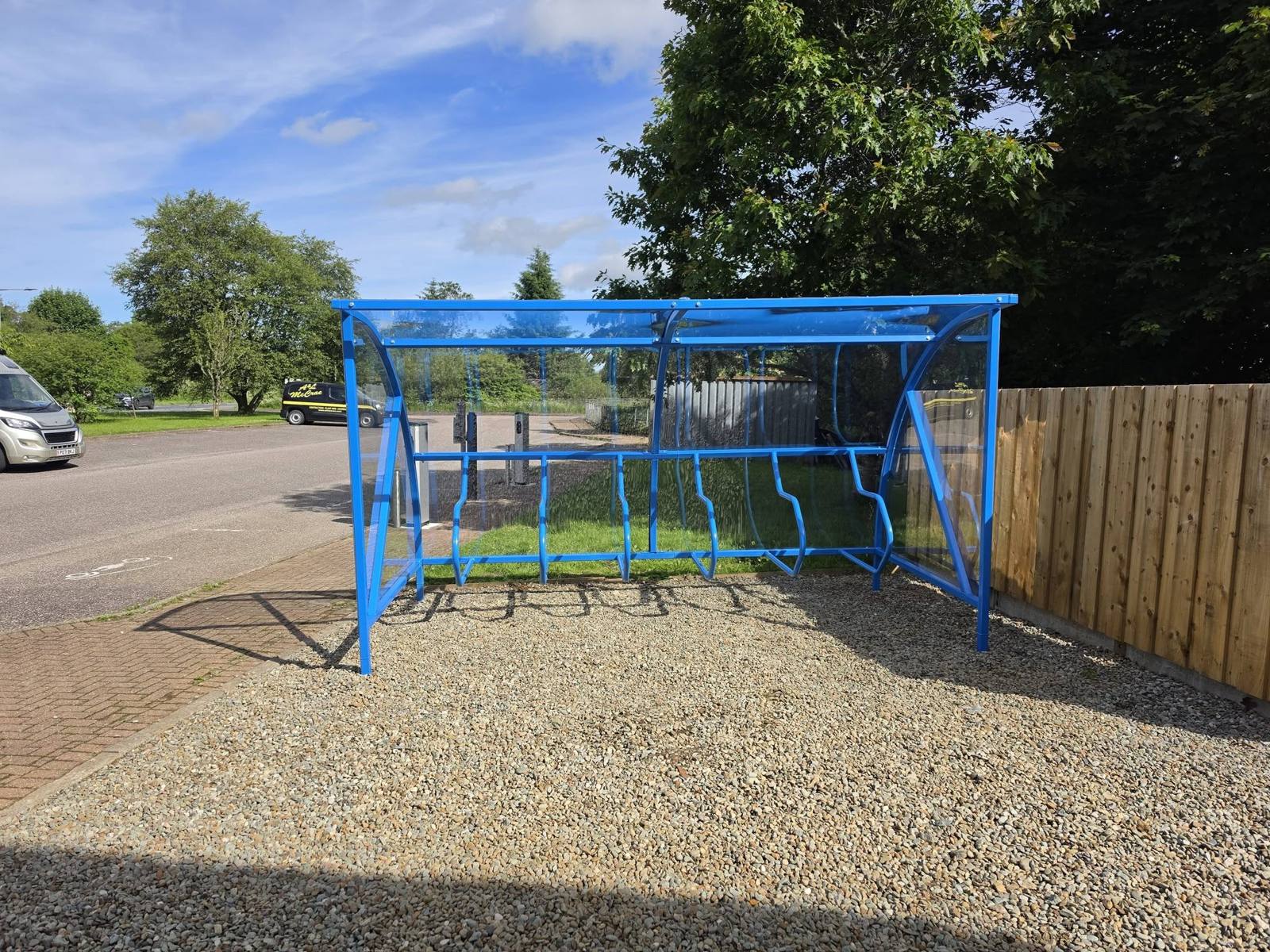
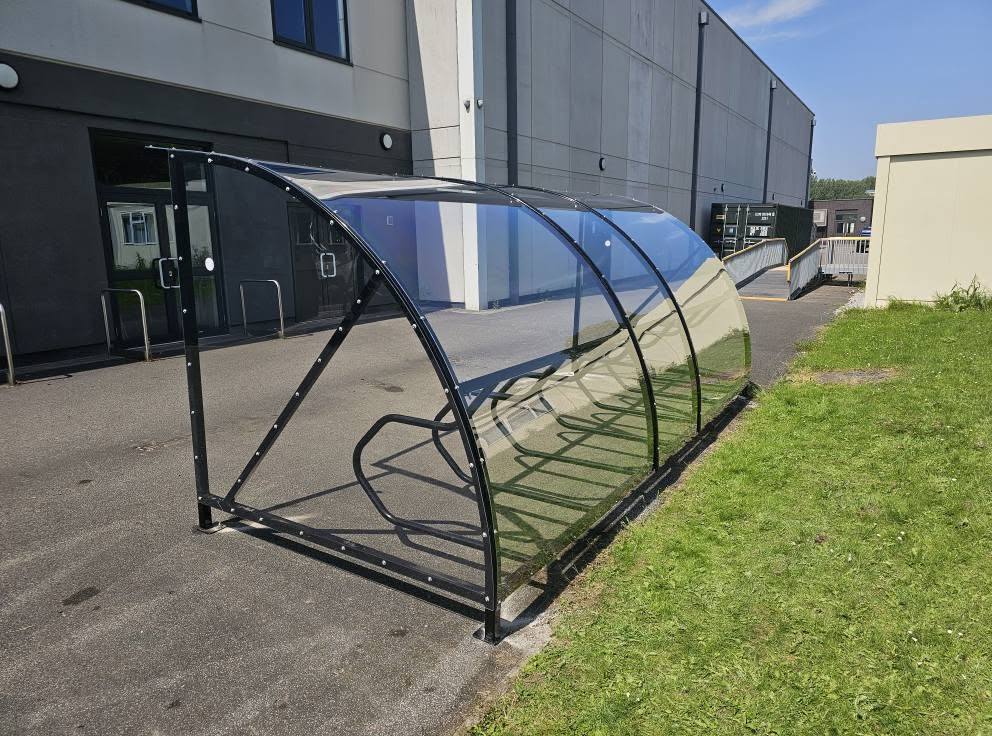
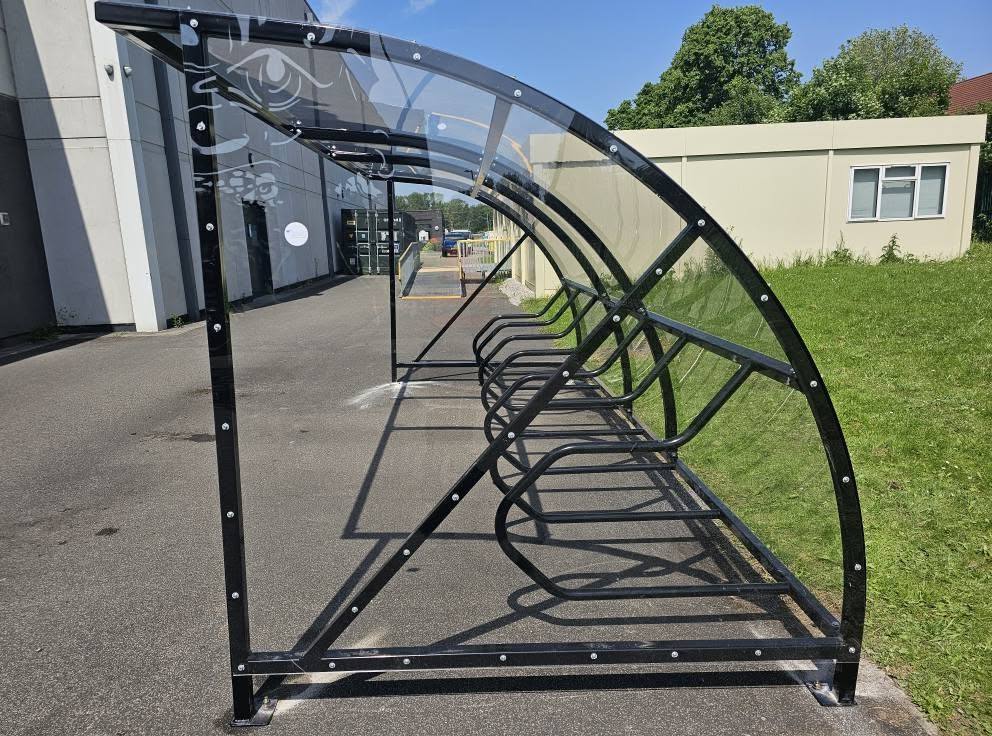
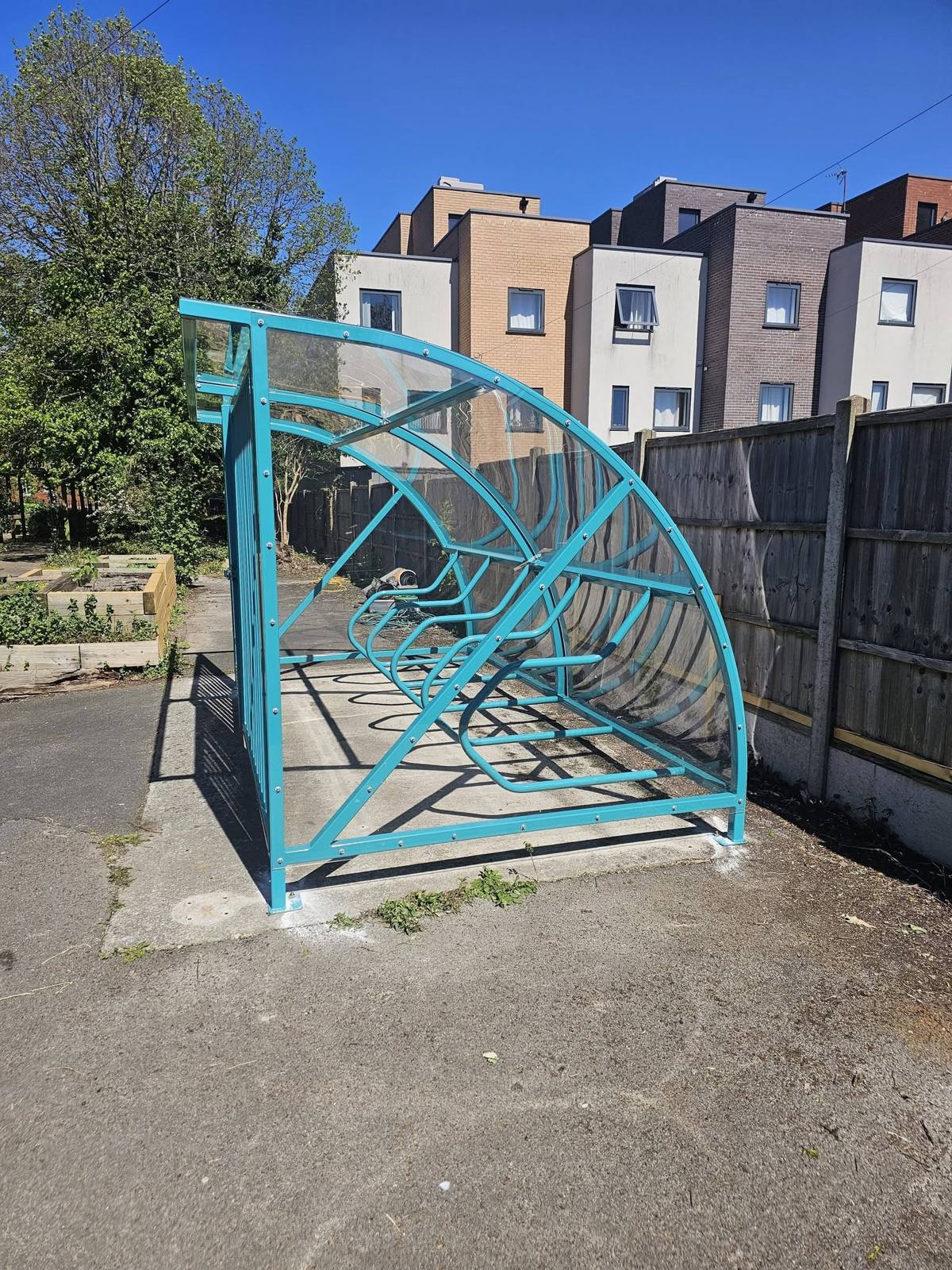
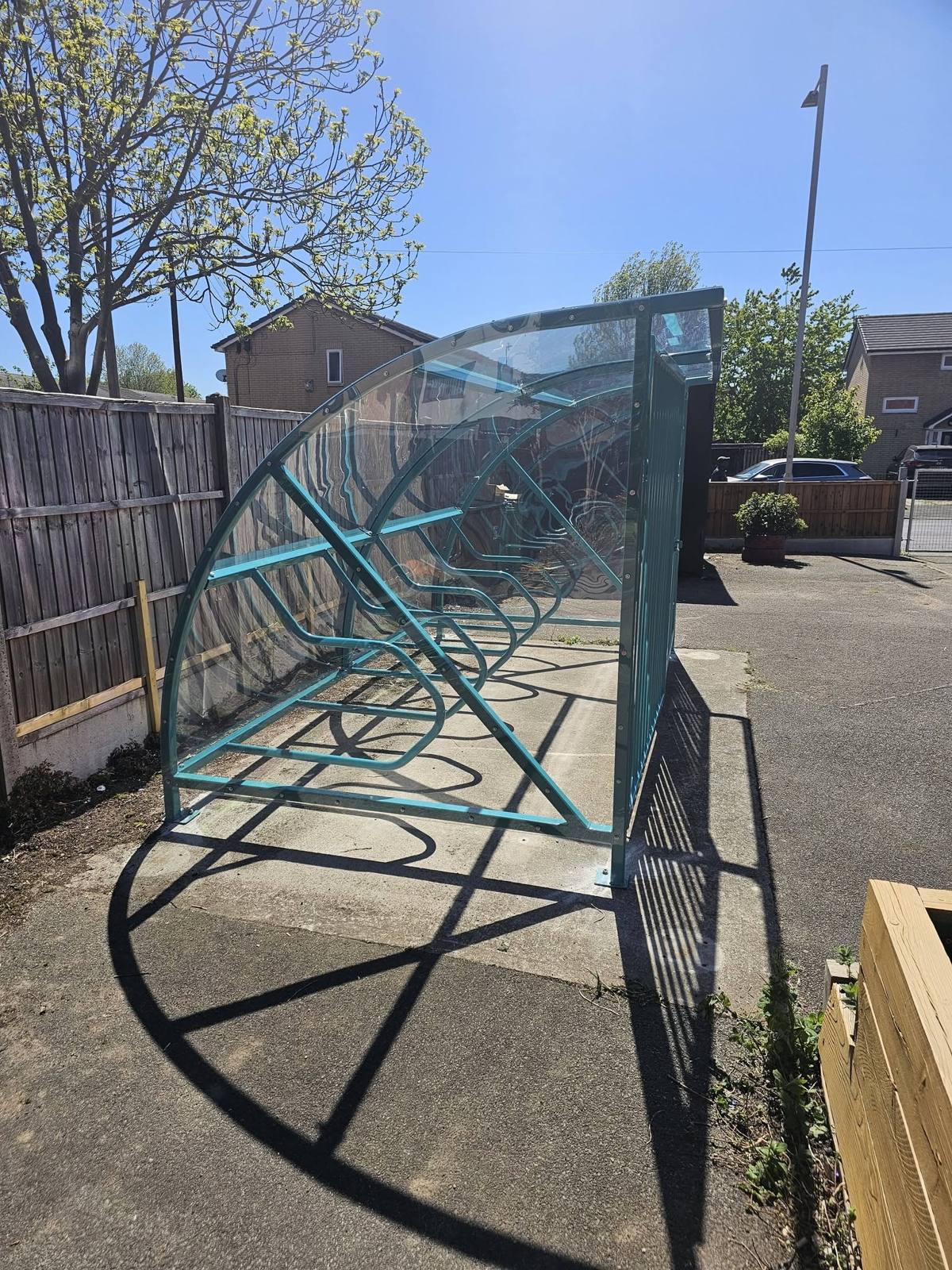
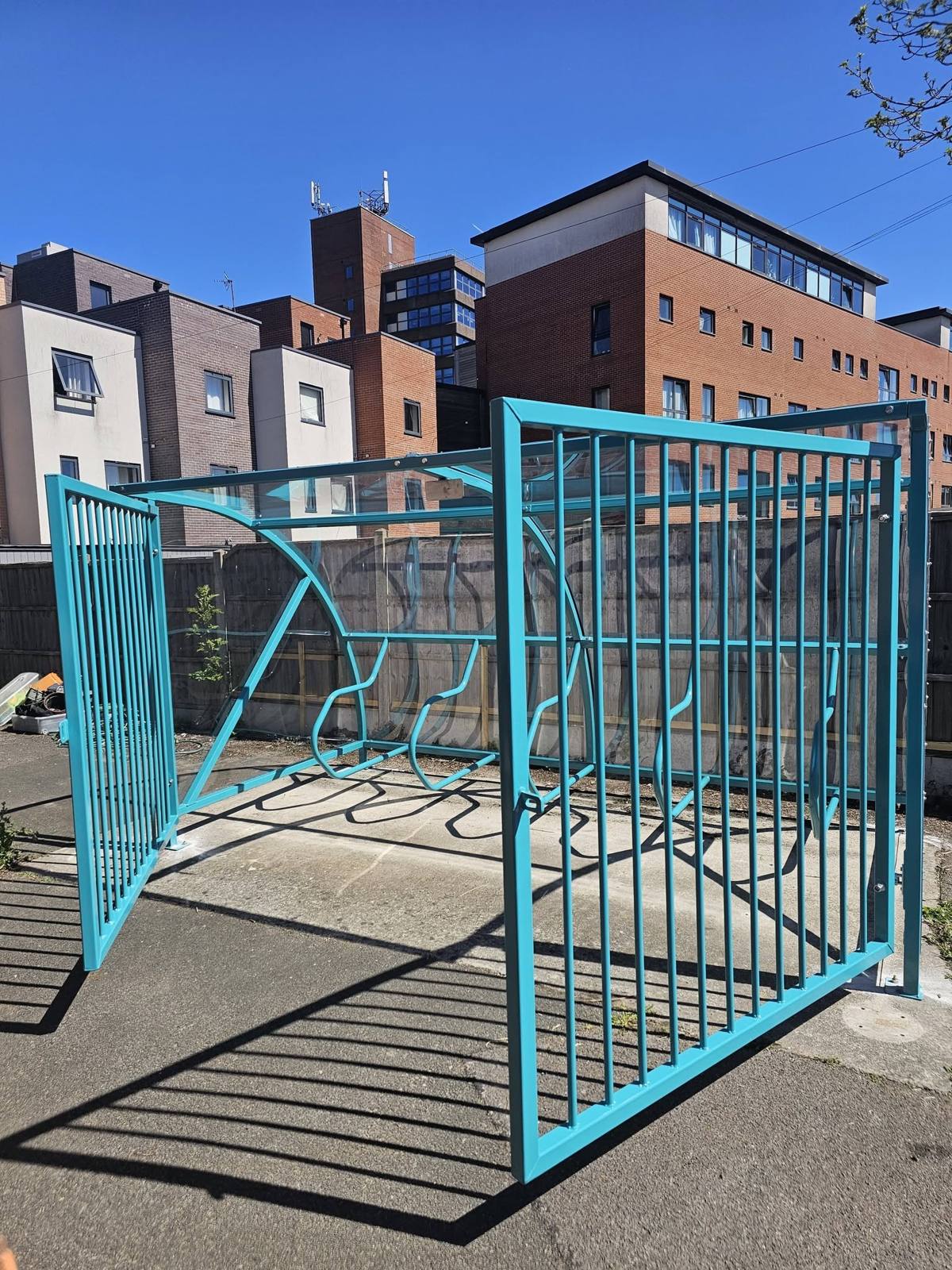
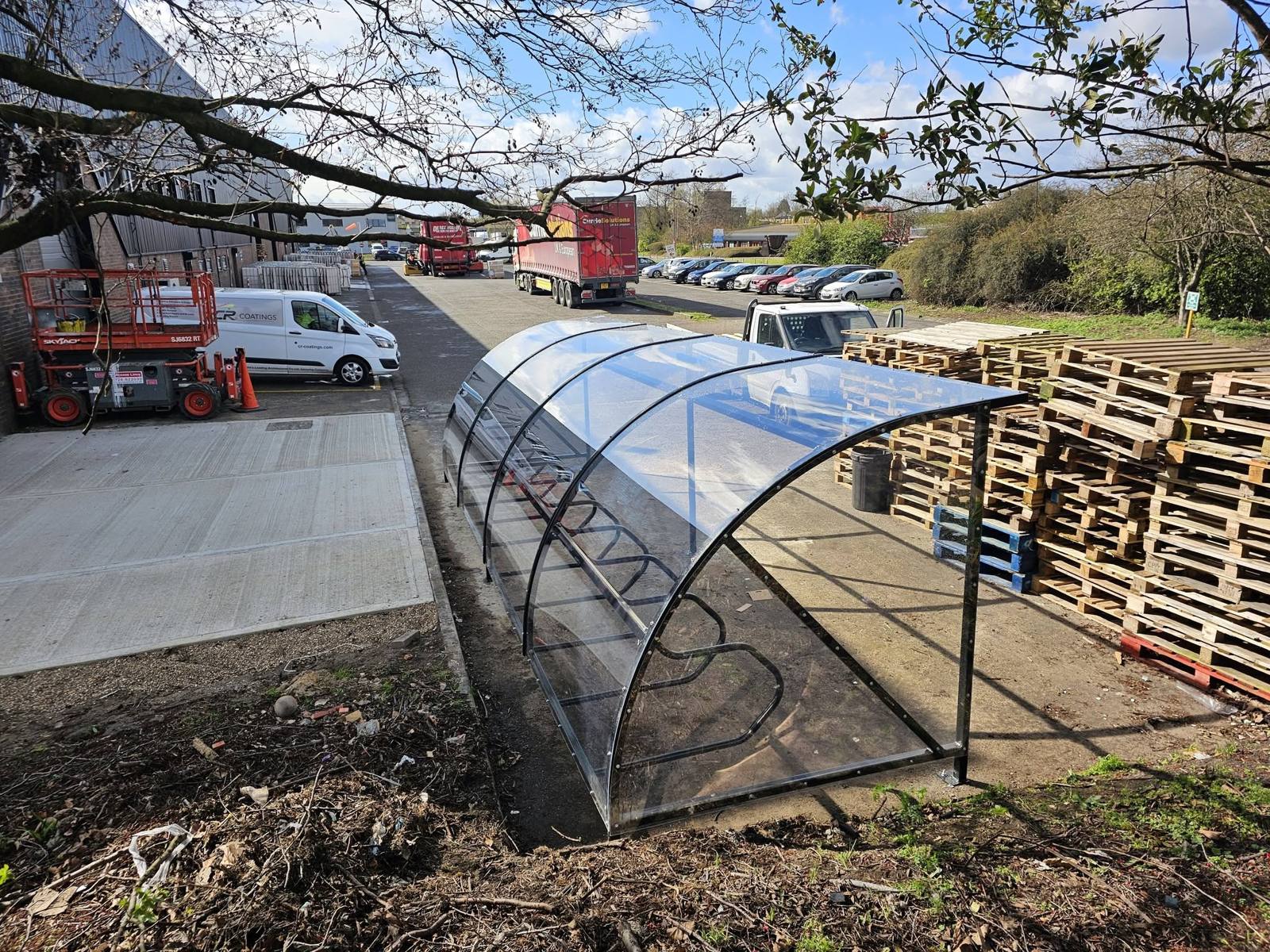
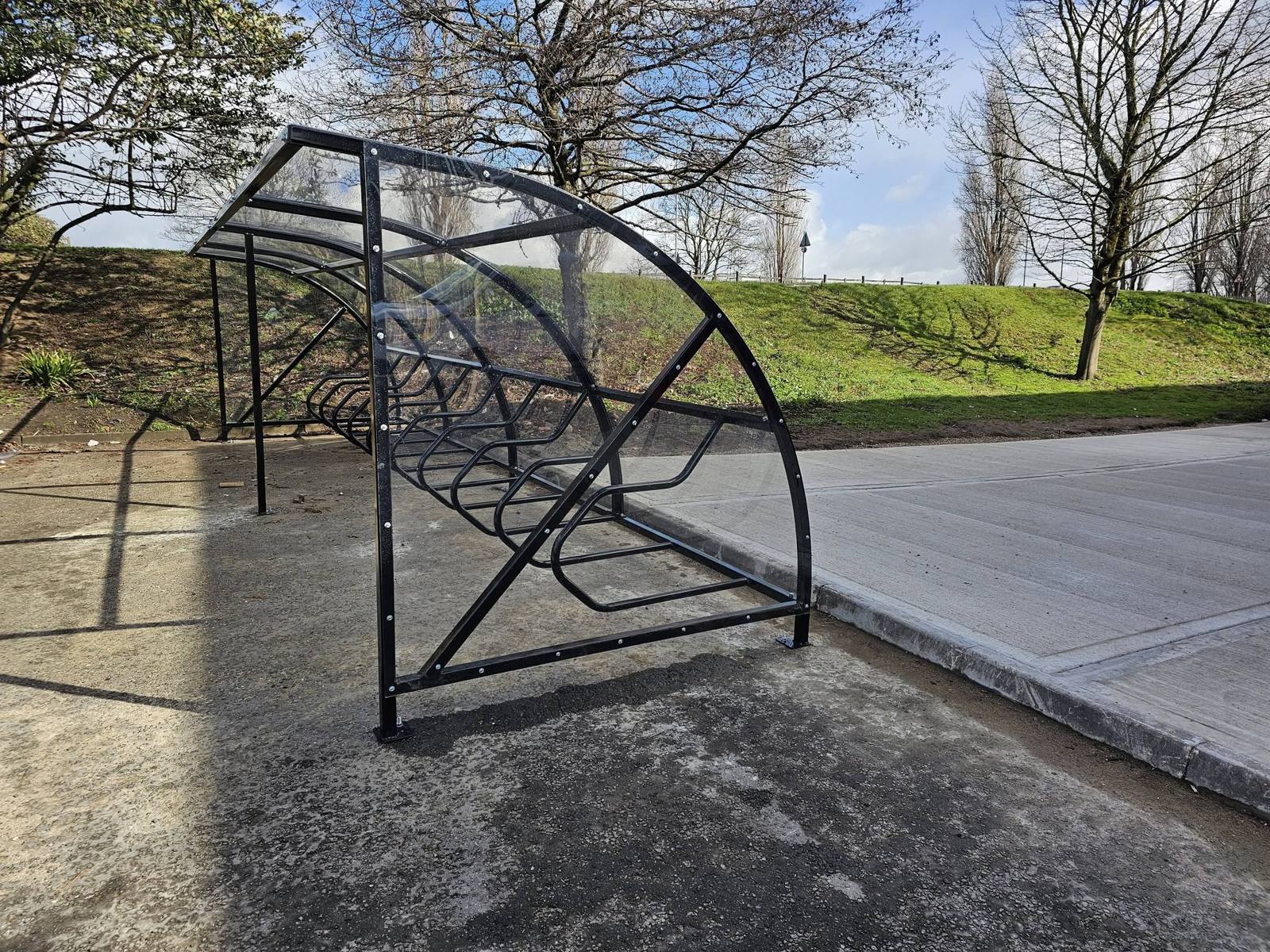
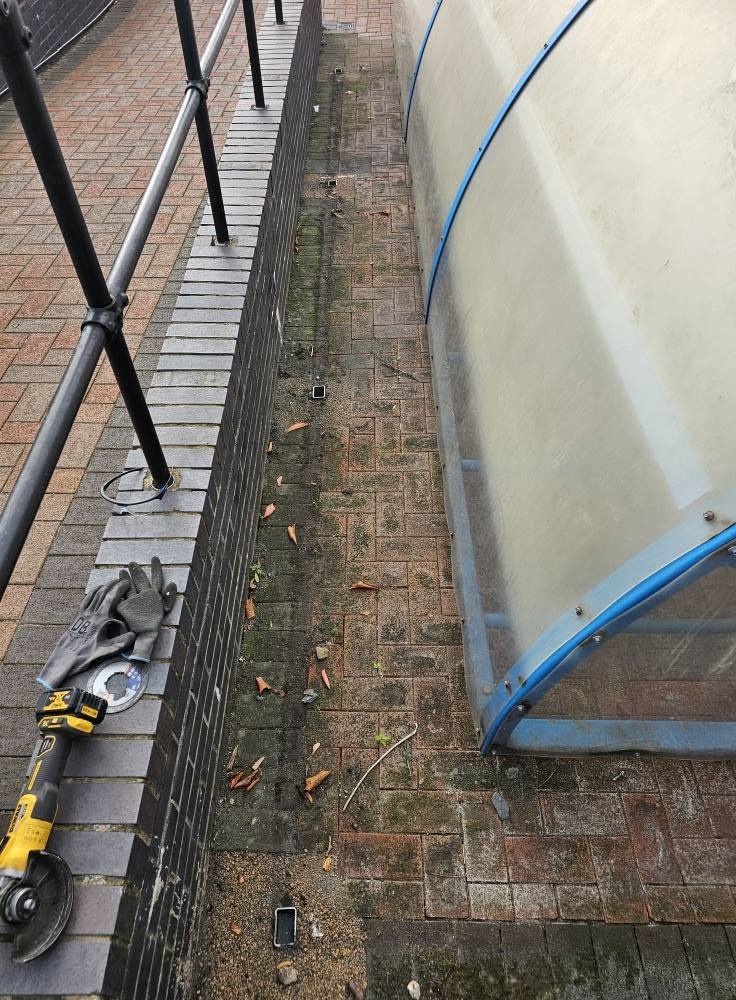
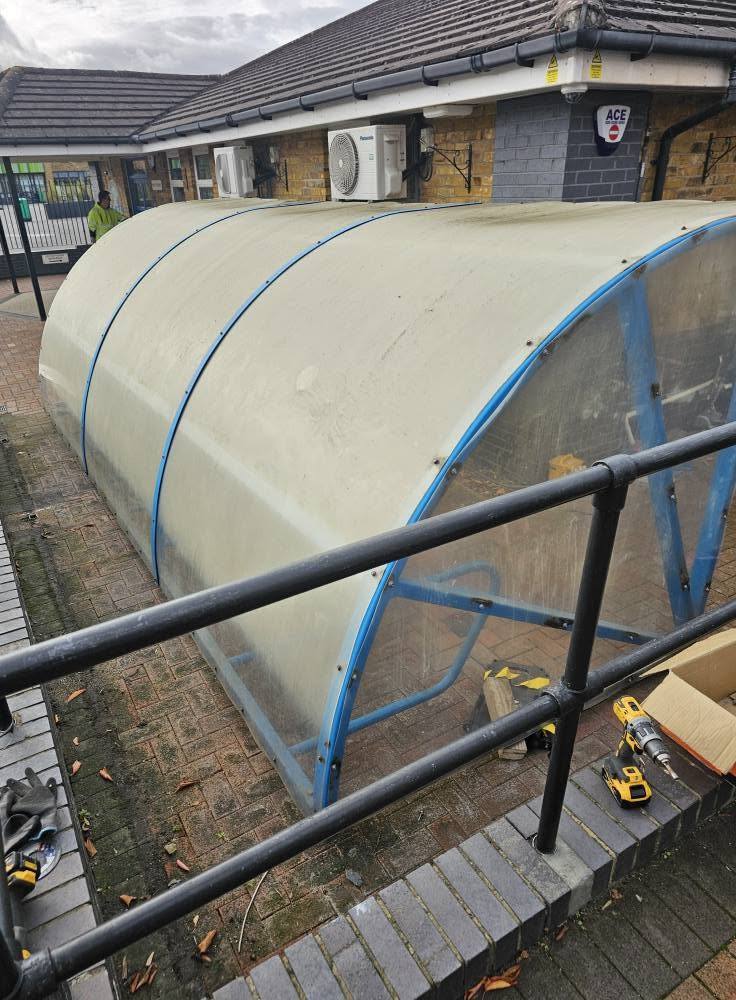
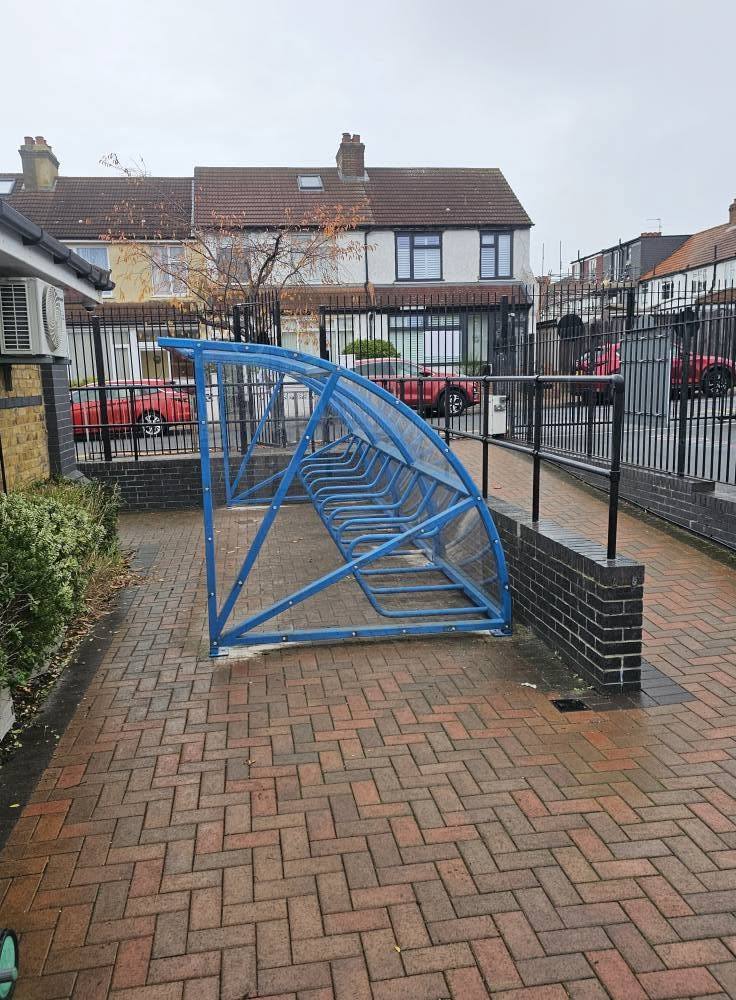
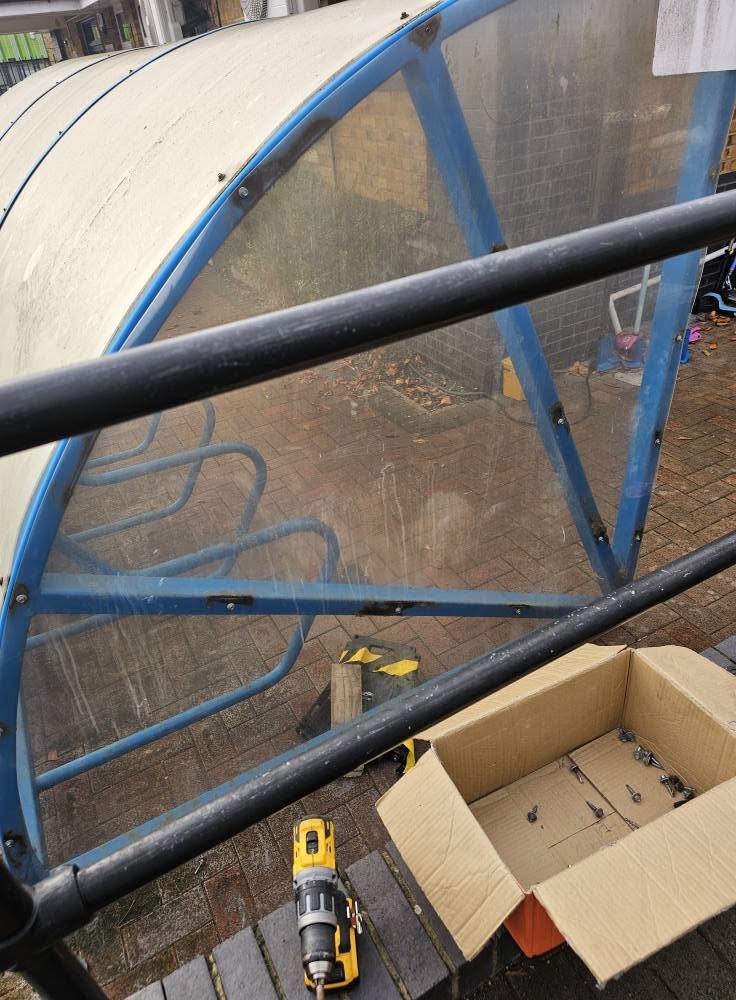
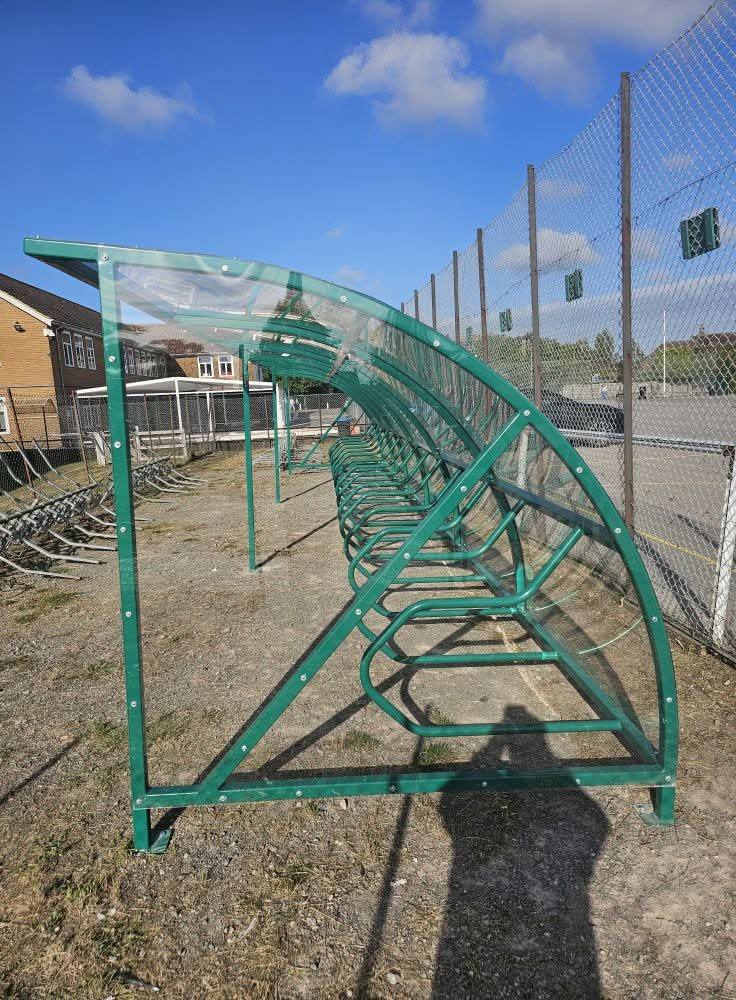
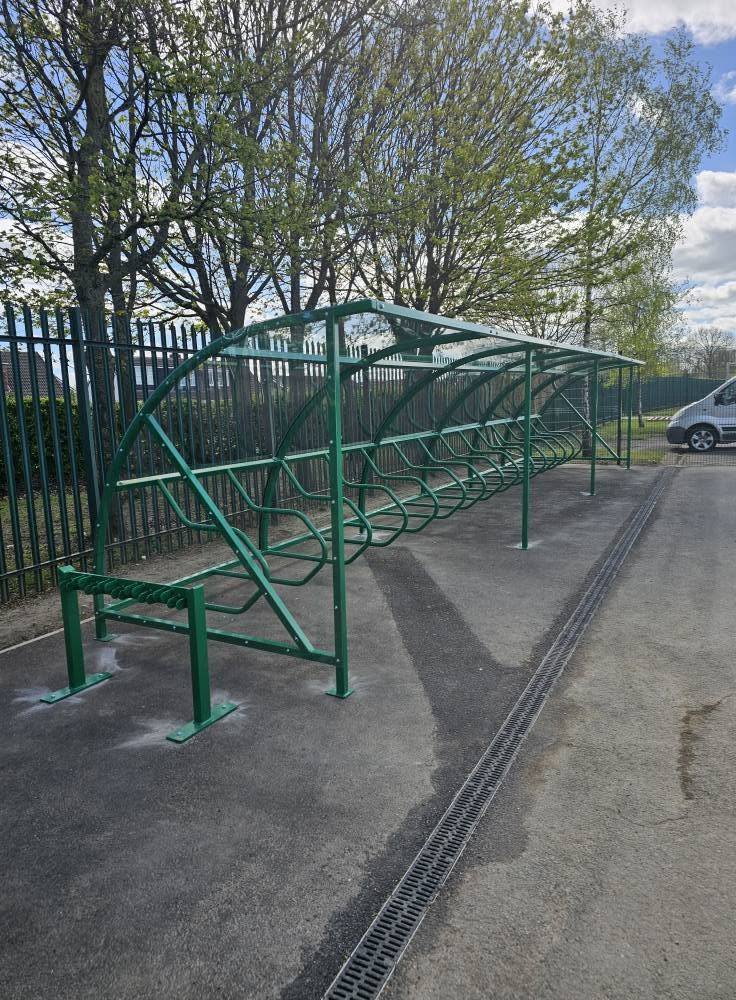
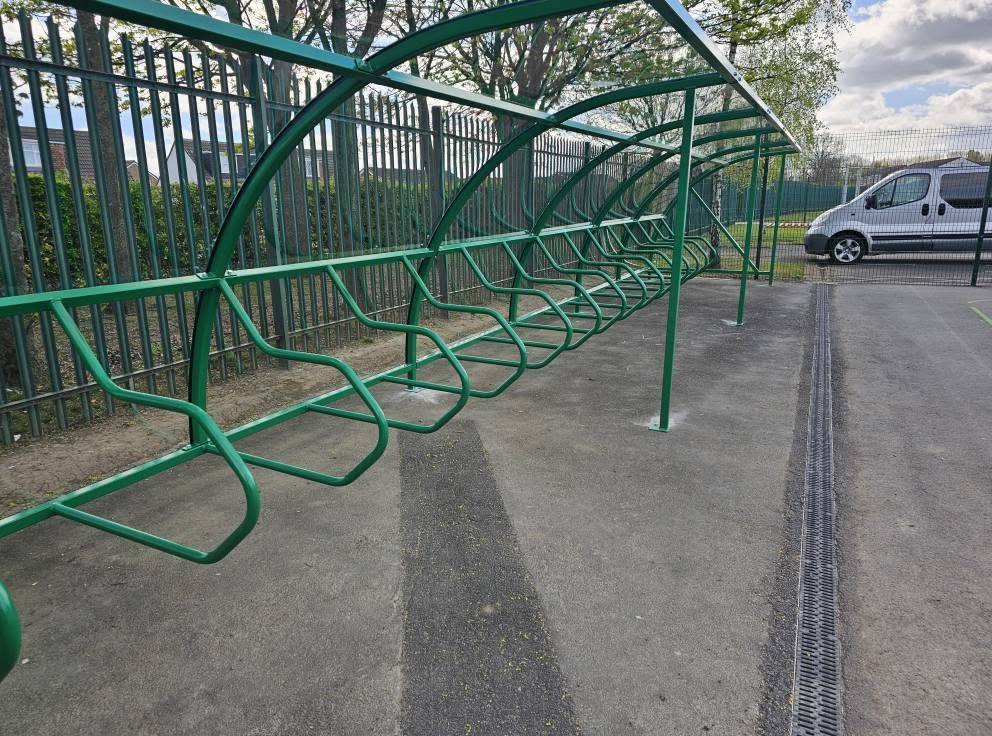
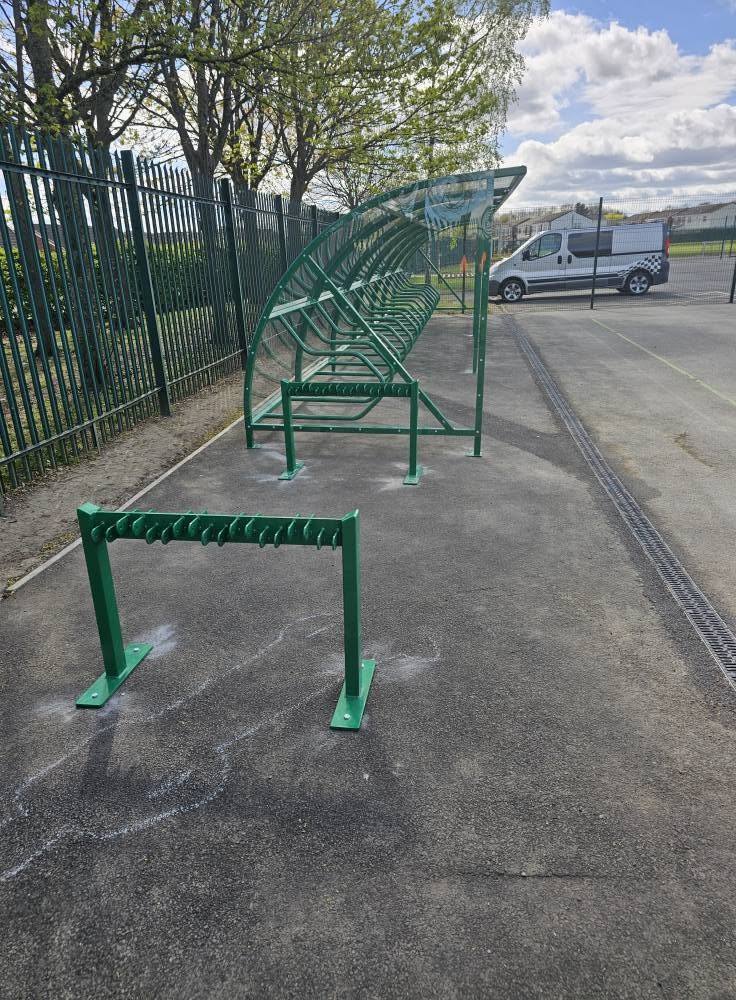
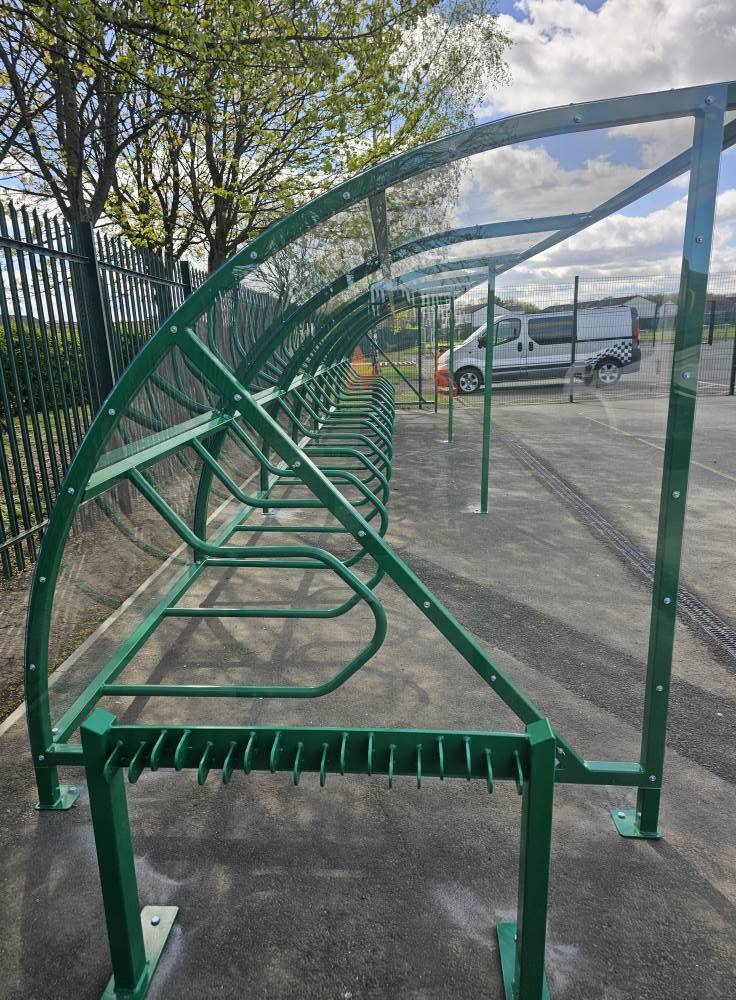
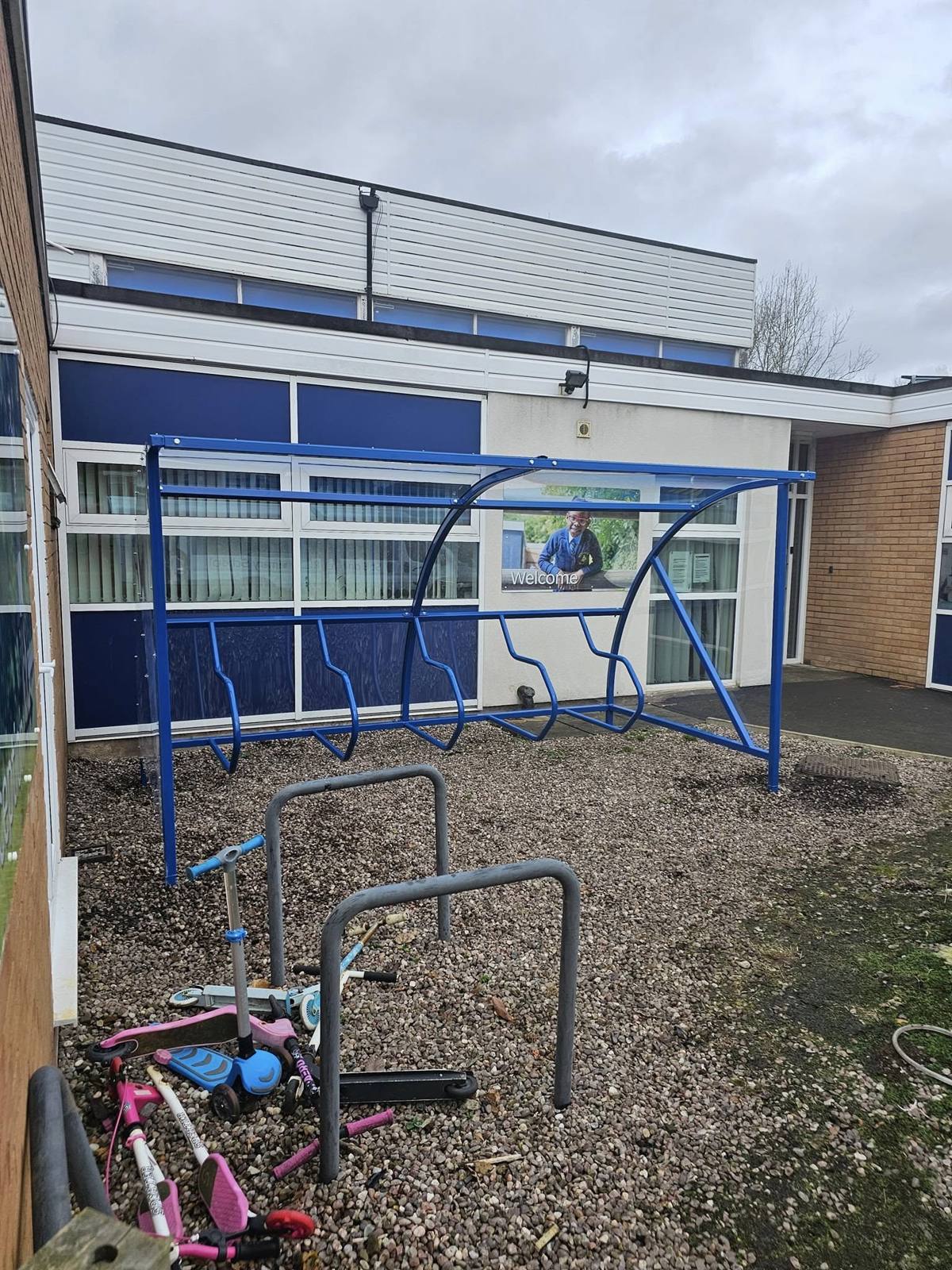
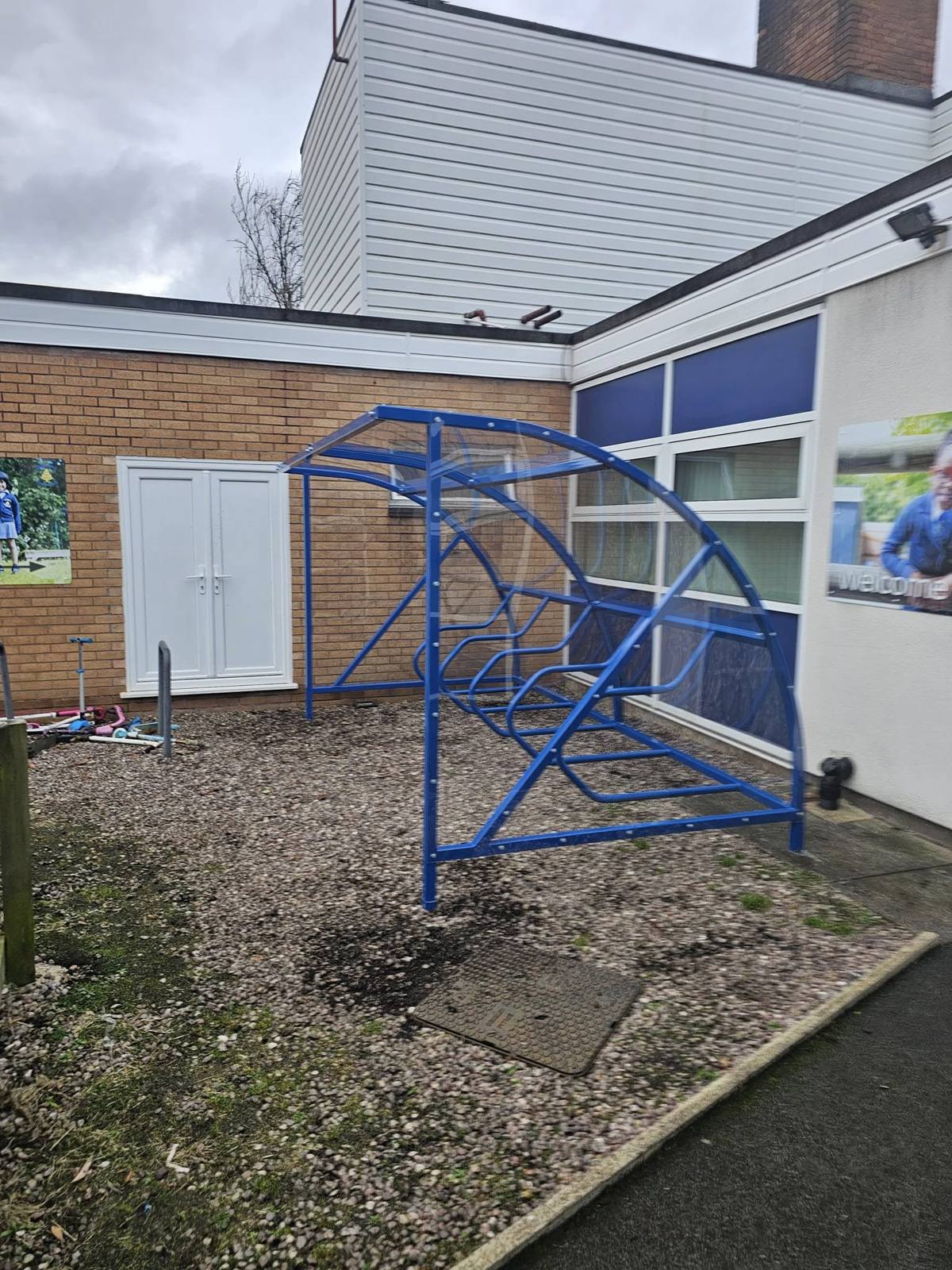
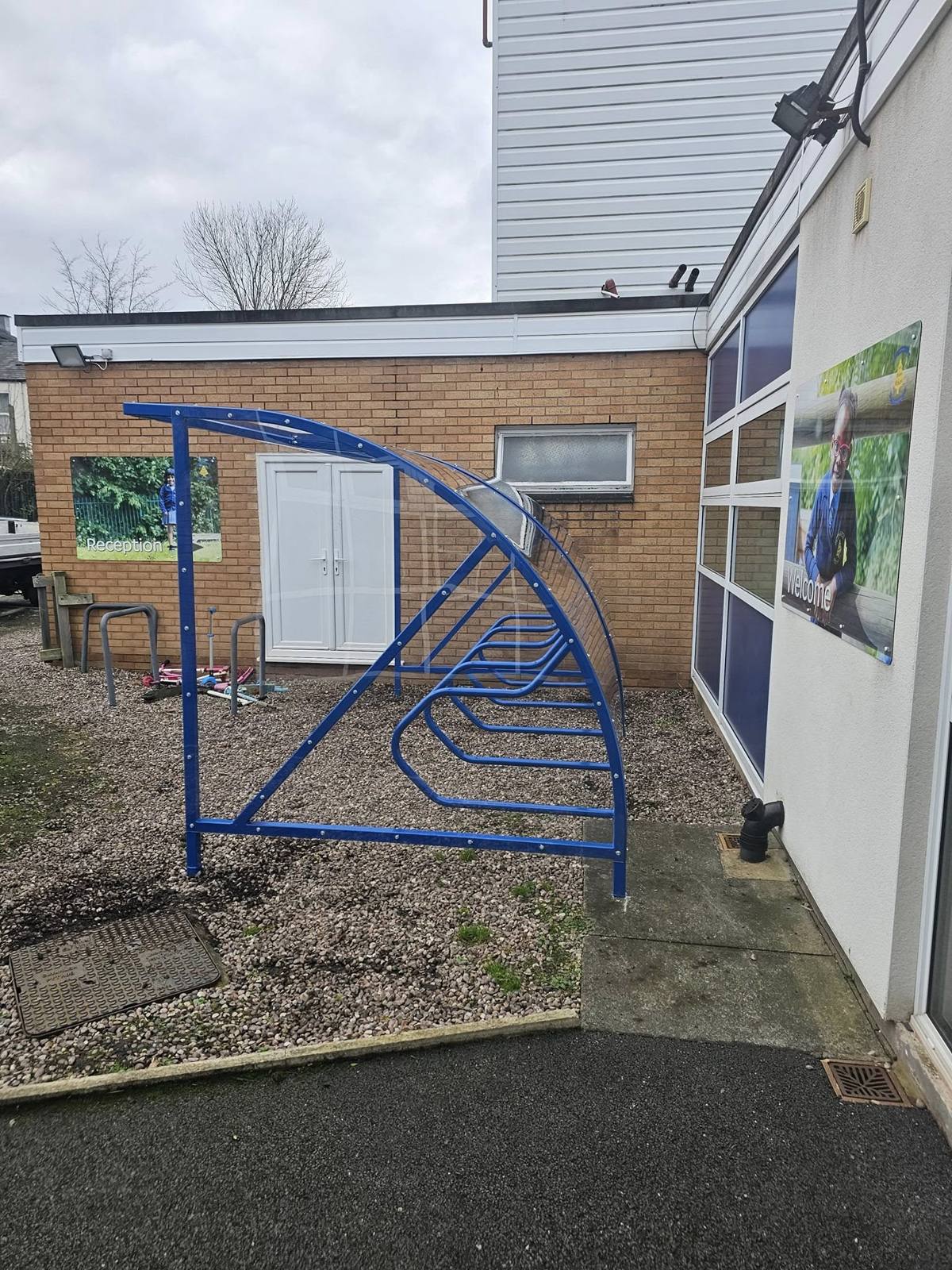
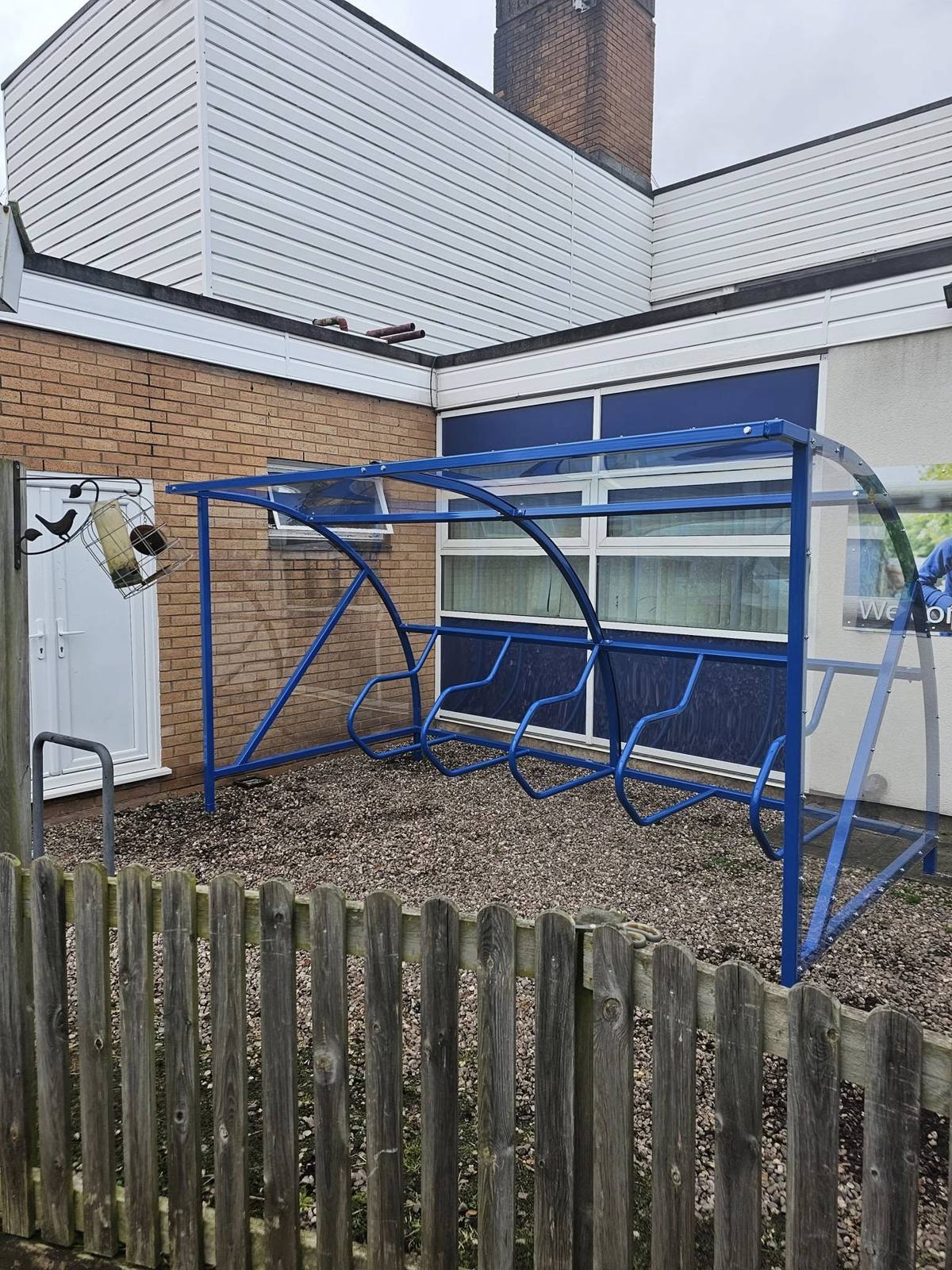
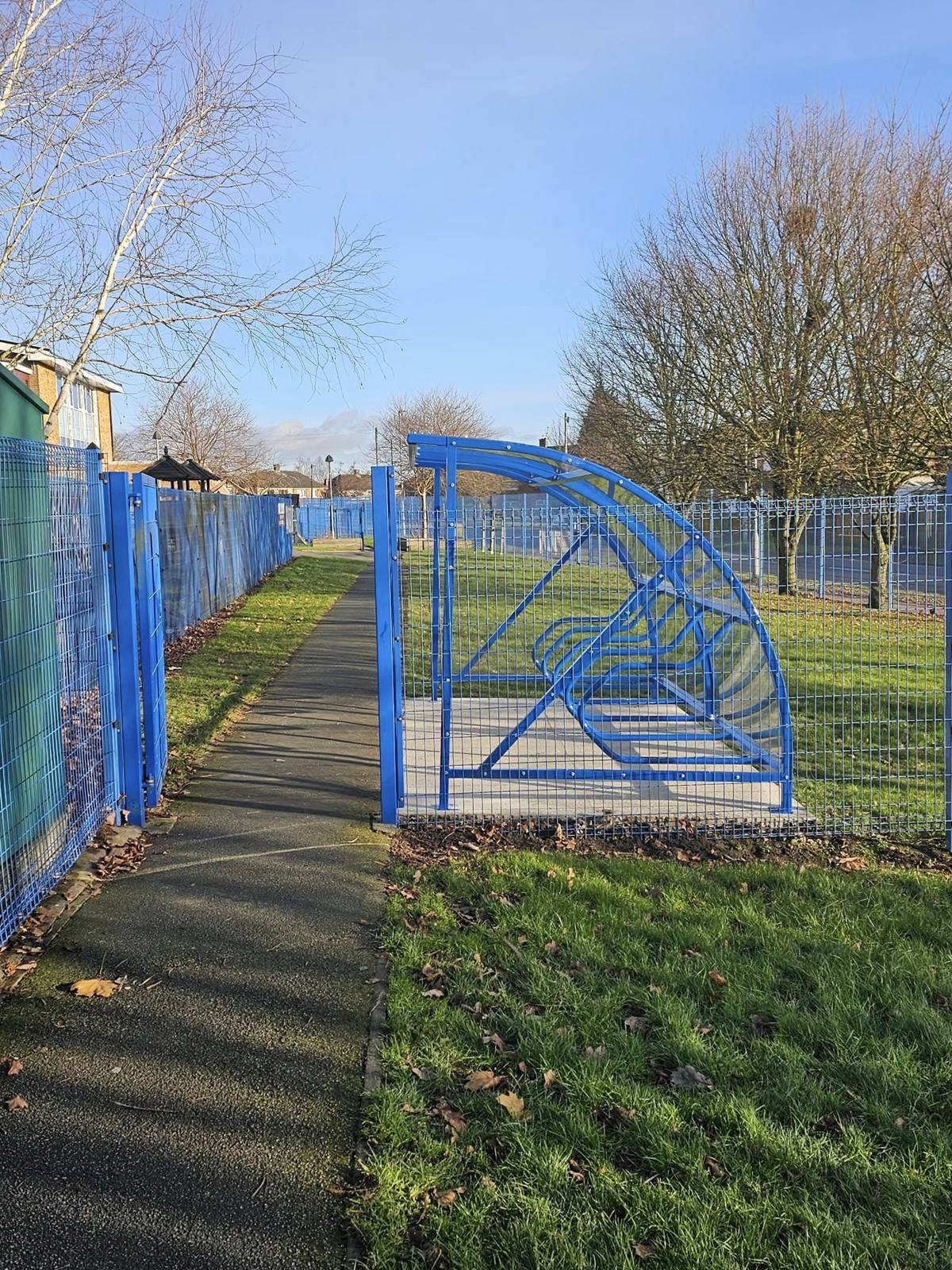
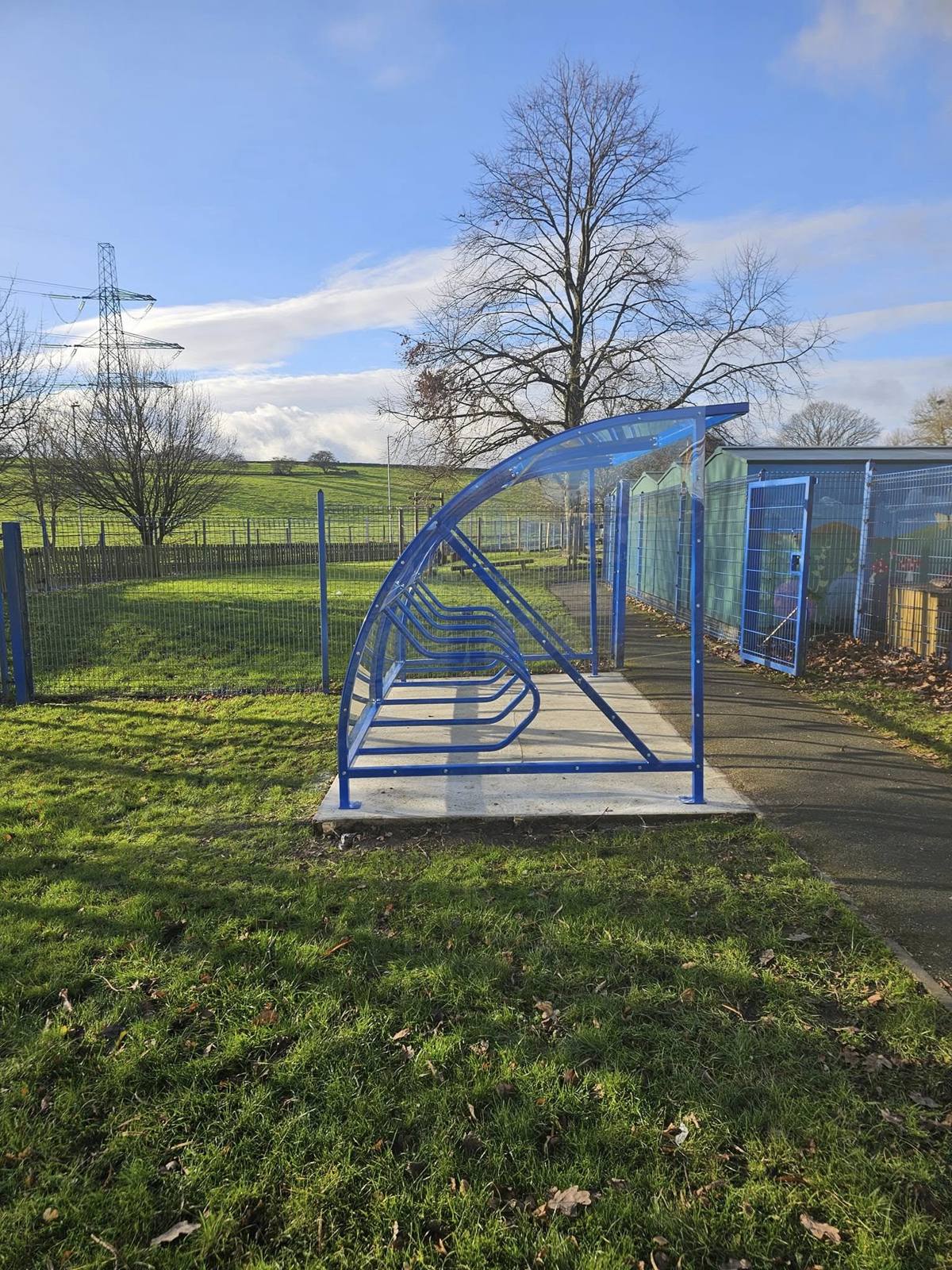
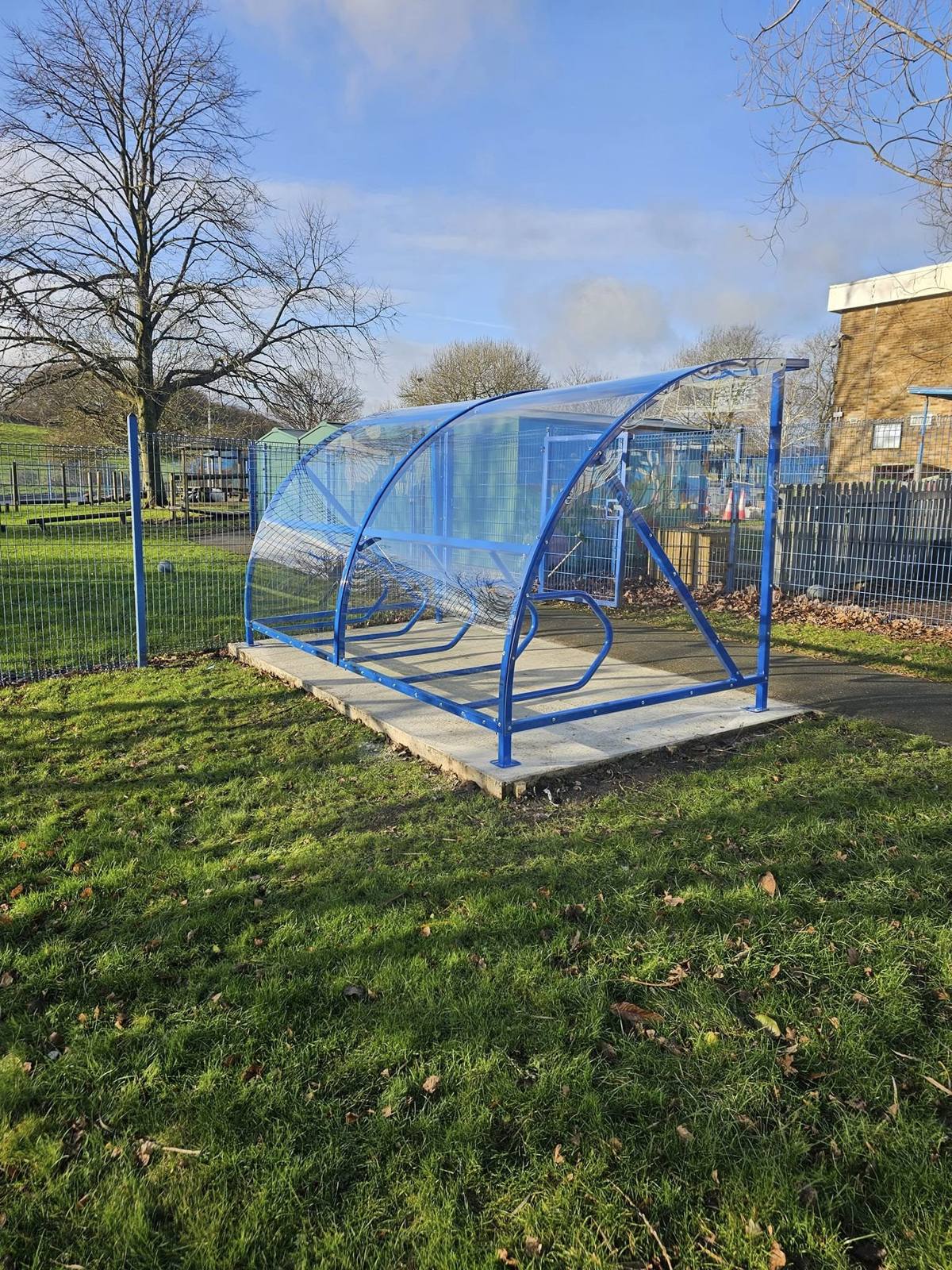
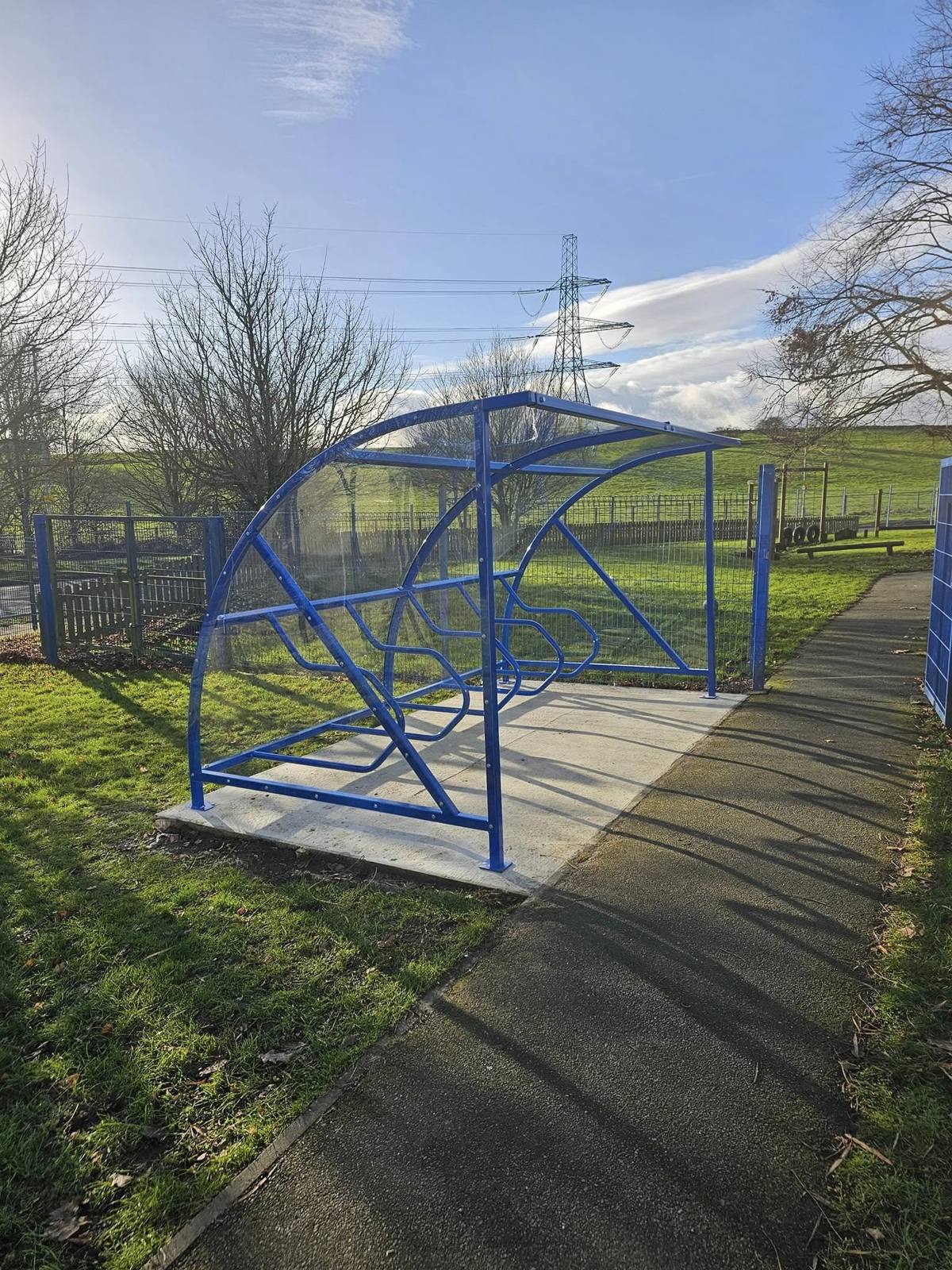
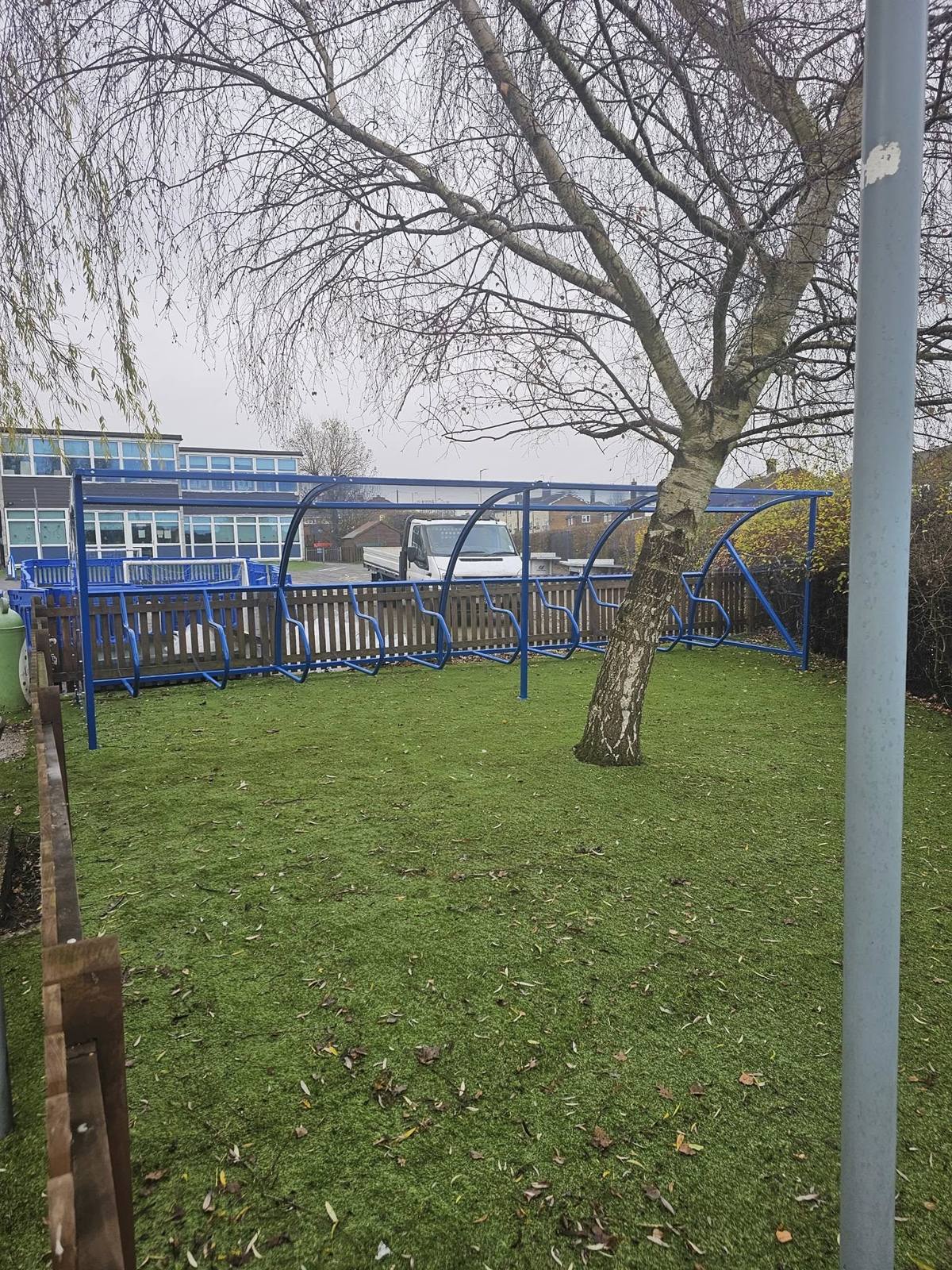
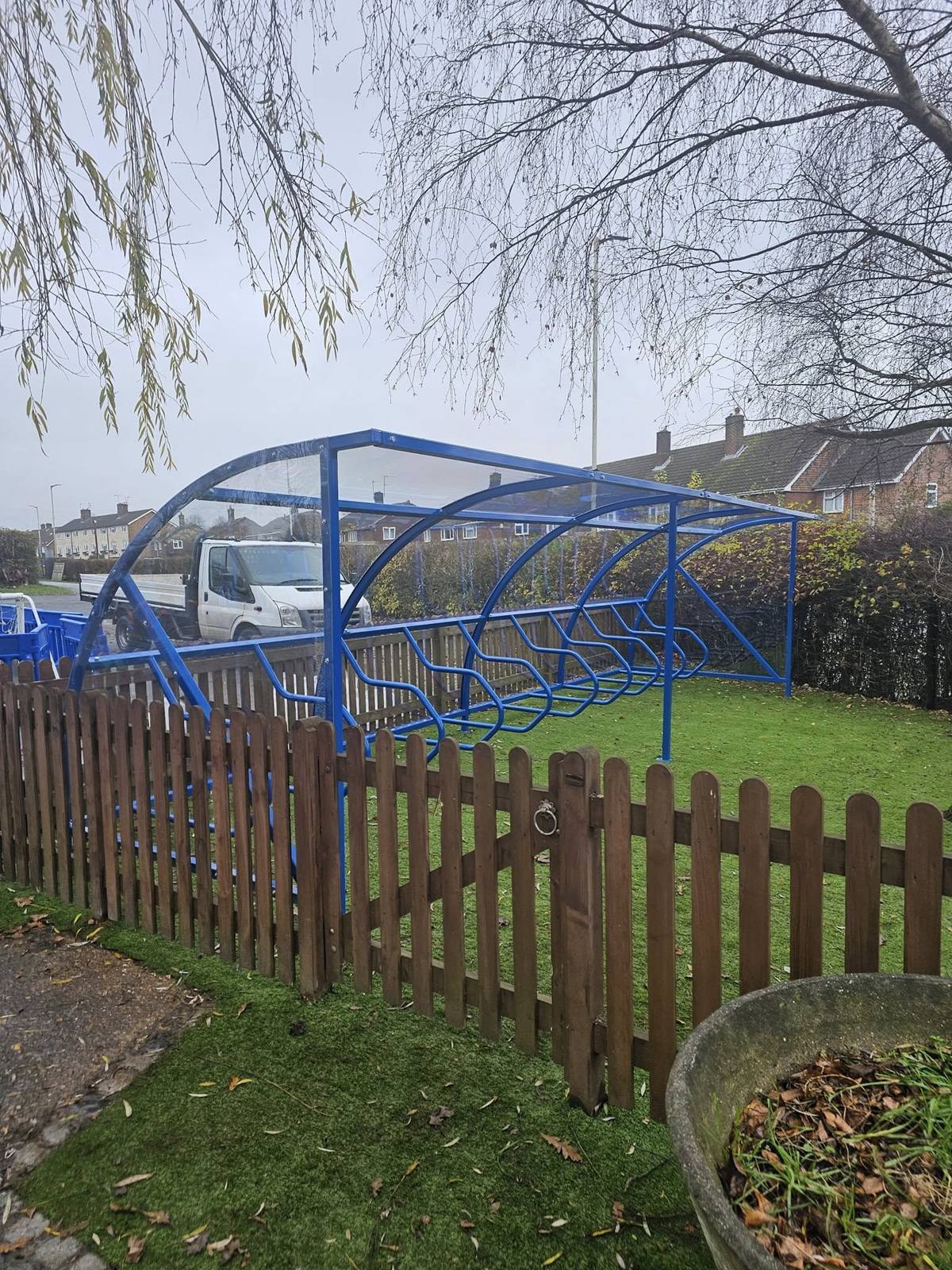
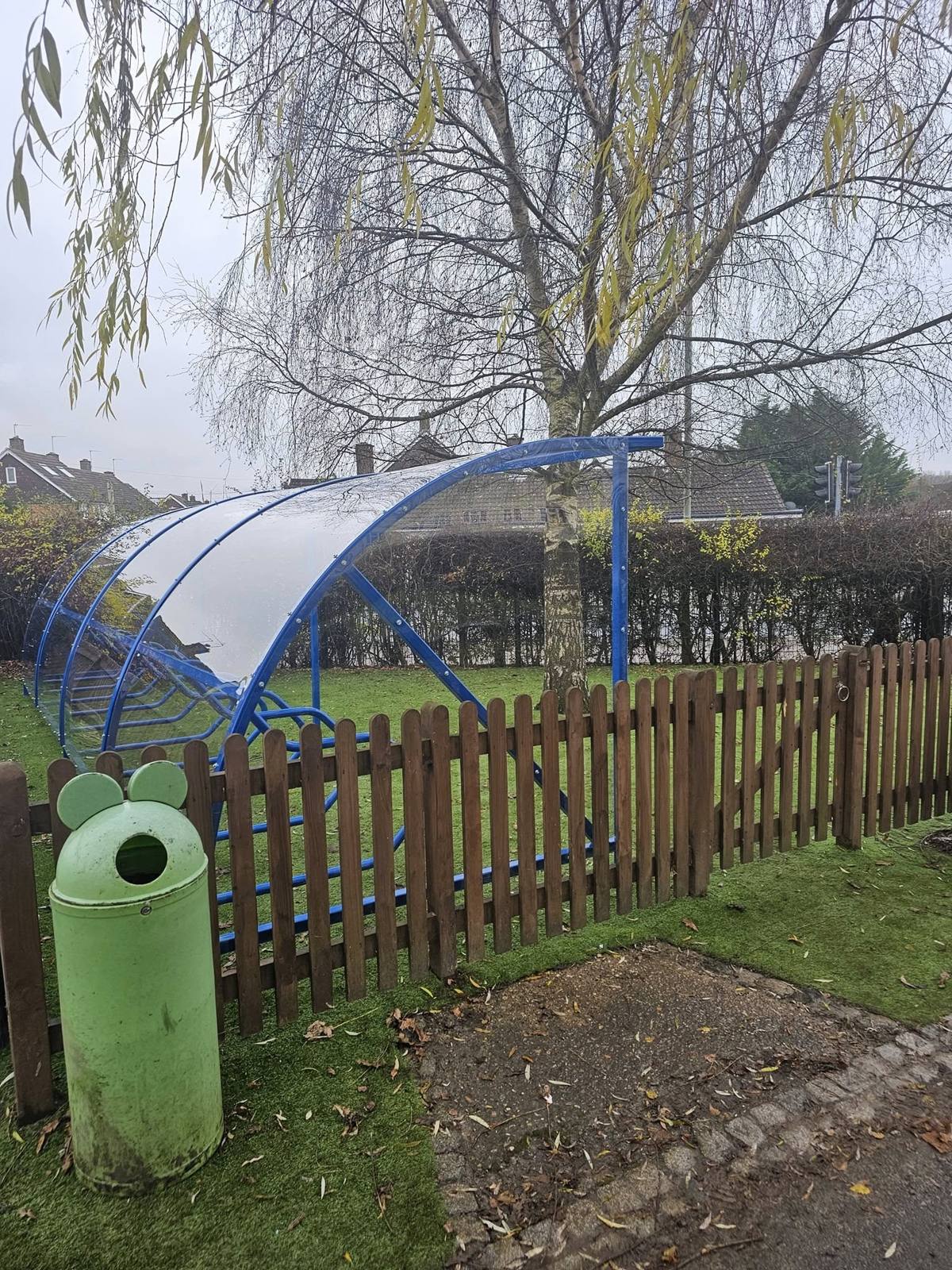
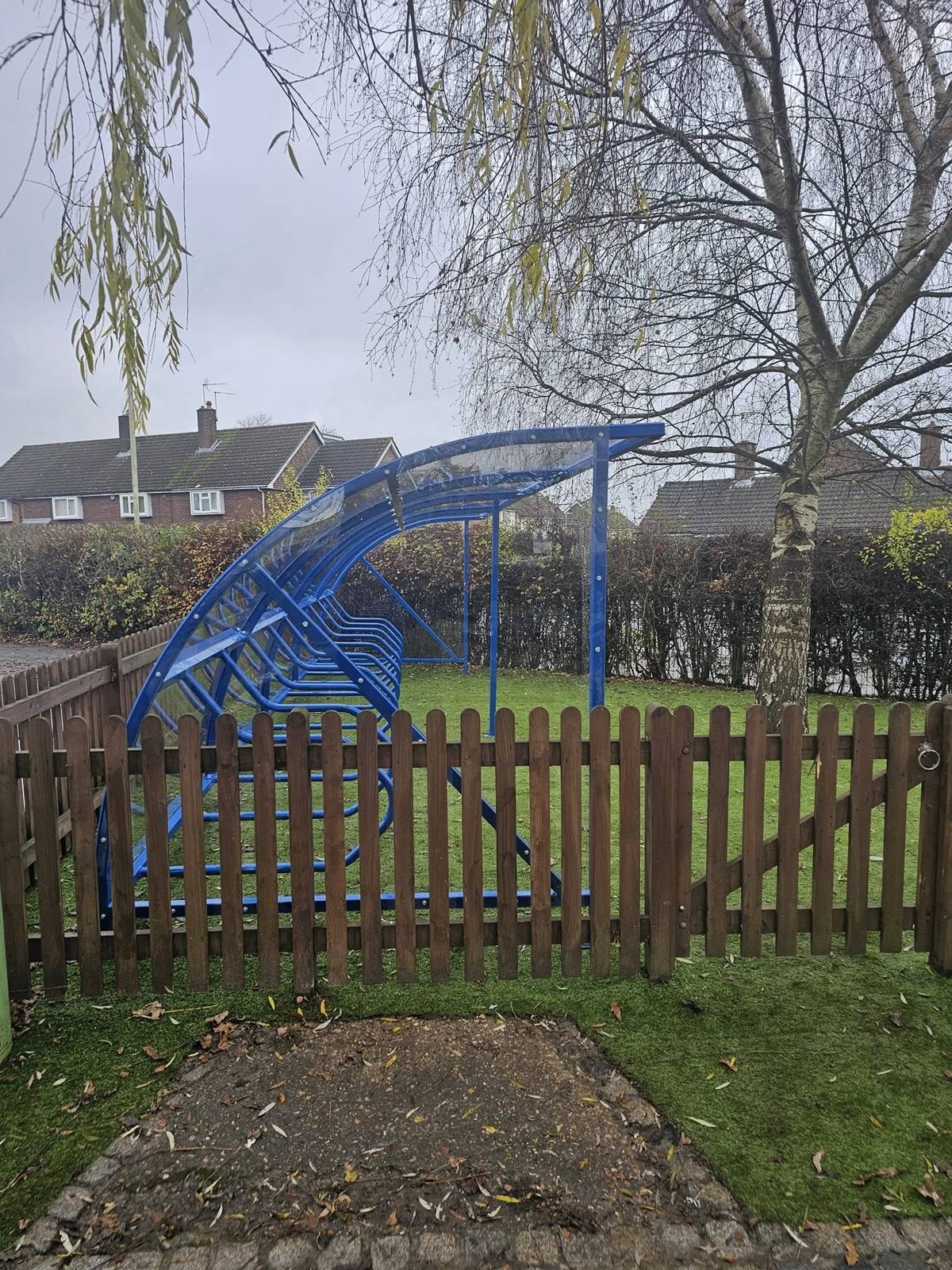
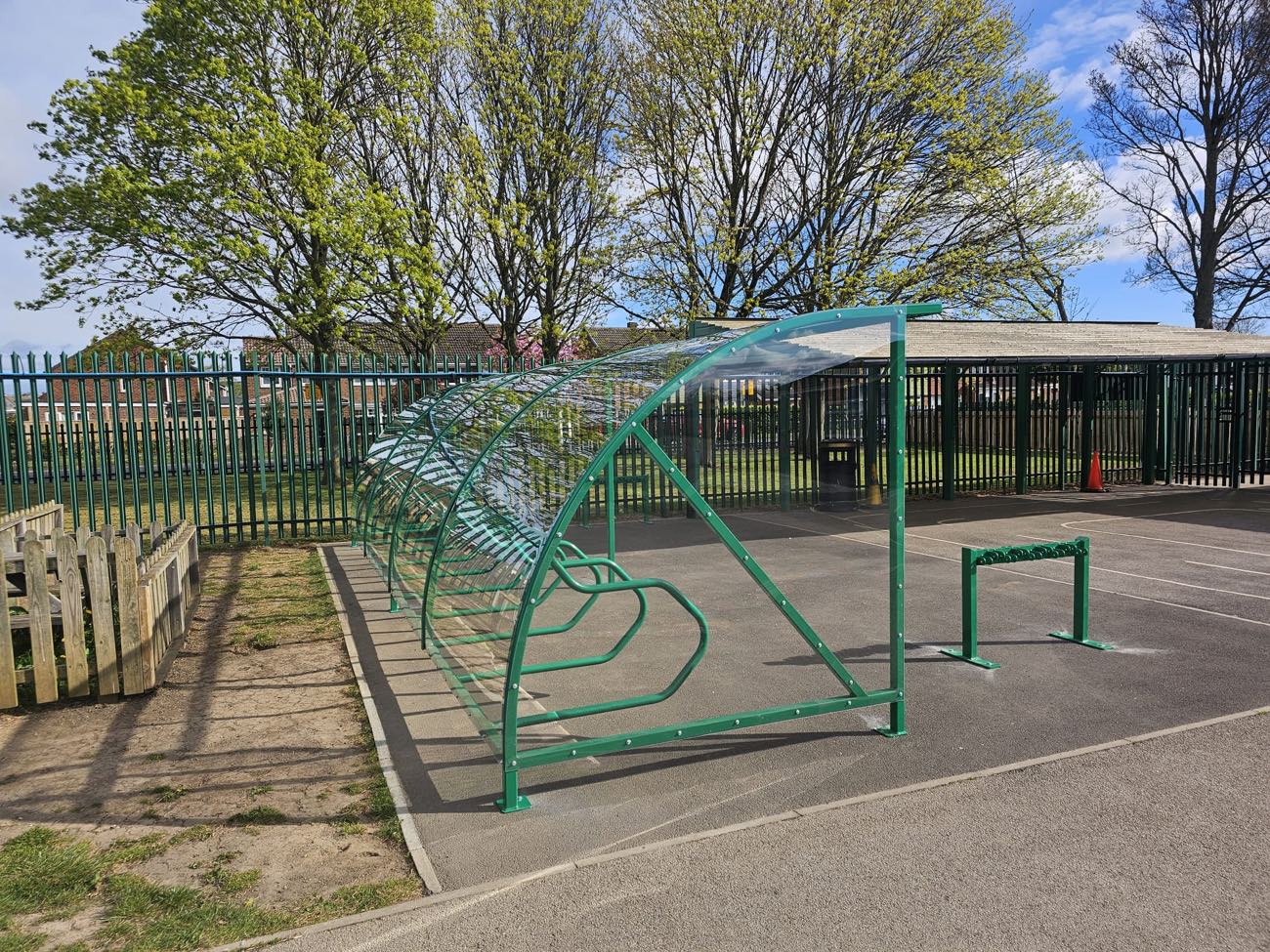
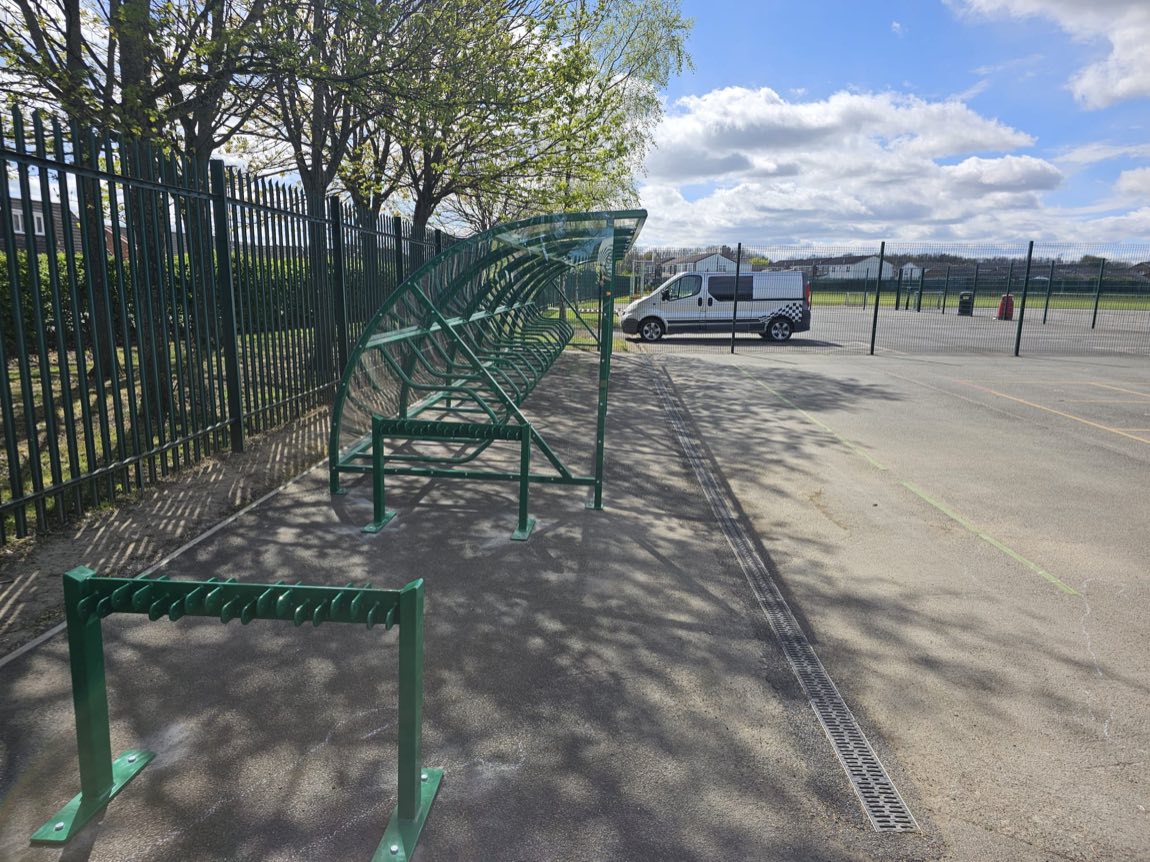
Chelsea cycle shelters, secure gated stores, buggy shelters and scooter racks we have installed for schools, workplaces and public sites across the UK. Every photo is a real job.
Why choose Canopies & Shelters for cycle shelters?
Canopies & Shelters sizes each cycle shelter to the count and the risk: how many cycles and scooters the site needs to hold, and whether they need to be kept dry or locked away.
We work with schools, academy trusts, councils and workplaces, and our school canopies team regularly specifies cycle shelters alongside covered walkways and playground canopies on the same site visit. Every shelter is made to measure for the site, finished in any RAL colour, and delivered by our own labour and manufacture. Recent school and workplace installs are pictured above.
Cycle shelter questions
Do cycle shelters need to be lockable?
Not always. An open or enclosed shelter suits a supervised, daytime site with good sightlines, while a secure lockable store with weldmesh sides and gates suits sites where cycles are left unattended or a higher theft risk applies.
How many cycles can a cycle shelter hold?
Capacity depends on the frame length and the number of toast-rack or Sheffield-style stands fitted; a Chelsea 12.0m shelter at Warden Park School holds around 30 cycles. We size each shelter to the site during survey and can fit scooter racks alongside cycle stands where a site needs both.
Can a cycle store help meet a planning condition?
Yes. Cycle storage is often a planning condition for new developments, and a correctly sized, secure cycle store or shelter is a common way to meet that requirement. We supply the drawings and specification a planning consultant needs to confirm it.
Can shelters be finished in our colours?
Yes. Frames are powder-coated to any RAL colour, and we can add custom laser-cut end panels, for example a school badge or graphic, as we did at Ellesmere Park High School.
How are cycle shelters fixed to the ground?
Cycle shelters are fitted to a prepared base, either sub-fixed into a new concrete base poured for the job or fixed to an existing hard-standing where the ground is already suitable.
Get a cycle shelter quote
Tell us how many cycles and scooters the site needs to hold and how secure they need to be, and we’ll return a design, a specification and a price.